


Financial Accounts of the United States - Z.1
Recent Developments RSS Data Download
The recent developments discussed below refer to data through December 31, 2025.
The net worth of households and nonprofit organizations increased by $2.2 trillion in the fourth quarter of 2025, as modest gains on corporate equity assets more than offset a decline in the value of real estate.
The debt of households and nonprofit organizations increased 3.3% at a seasonally adjusted annual rate in the fourth quarter amid somewhat slower growth of mortgage debt and steady growth of nonmortgage consumer credit.
Domestic nonfinancial business debt expanded 2.4% at a seasonally adjusted annual rate in the fourth quarter, reflecting moderate net issuance of corporate bonds and solid growth in mortgage loans.
Household net worth
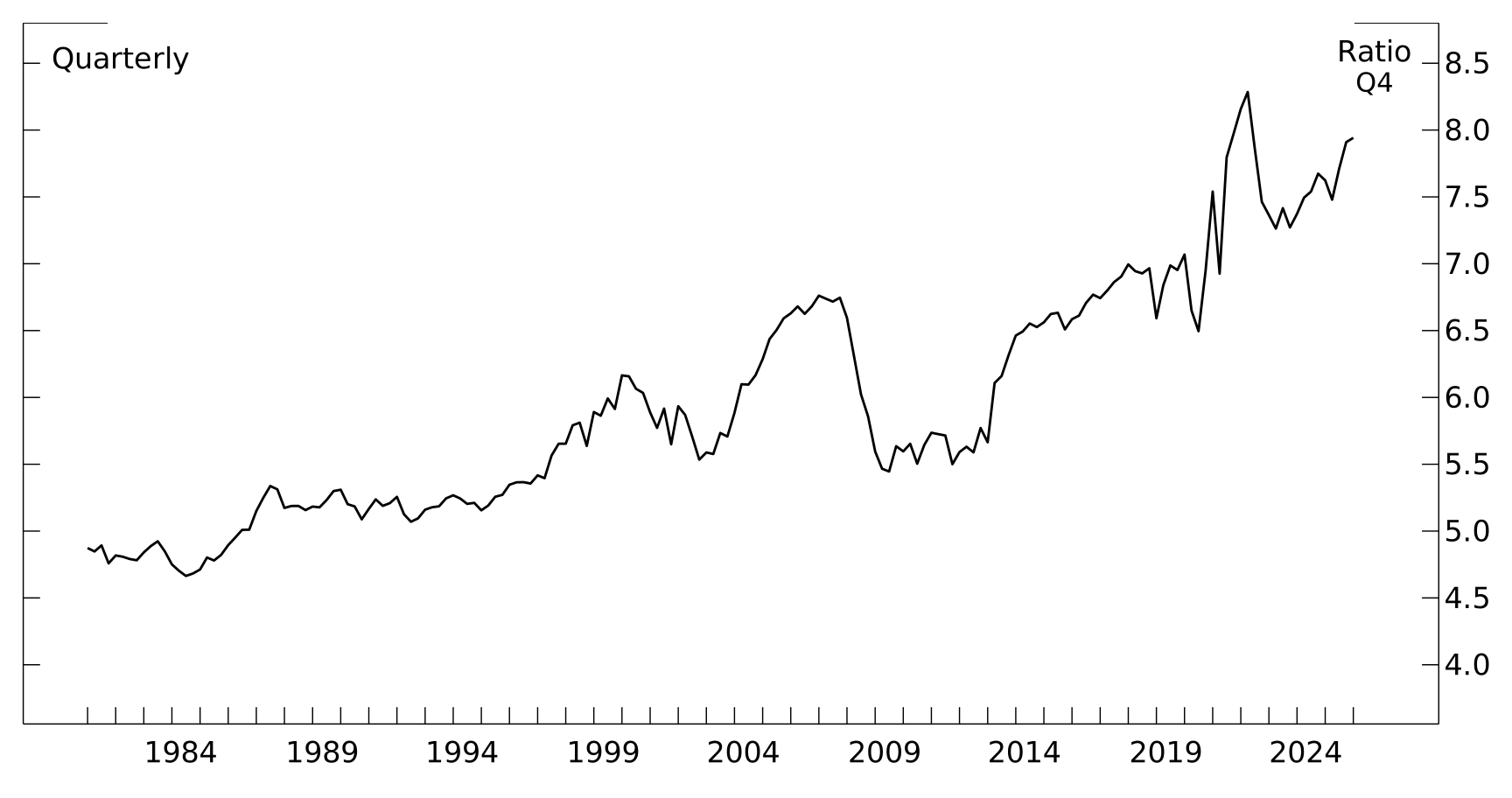
The net worth of households and nonprofit organizations – the difference between the value of total assets and liabilities (figure 1) – increased by $2.2 trillion to $184.1 trillion in the fourth quarter.1 The ratio of net worth to disposable personal income (DPI), a measure of households’ potential to finance consumption out of their wealth, rose to 7.94 in the fourth quarter (figure 2), still below its record high in 2022:Q1 but well above the historical average.
Figure 1: Household balance sheet
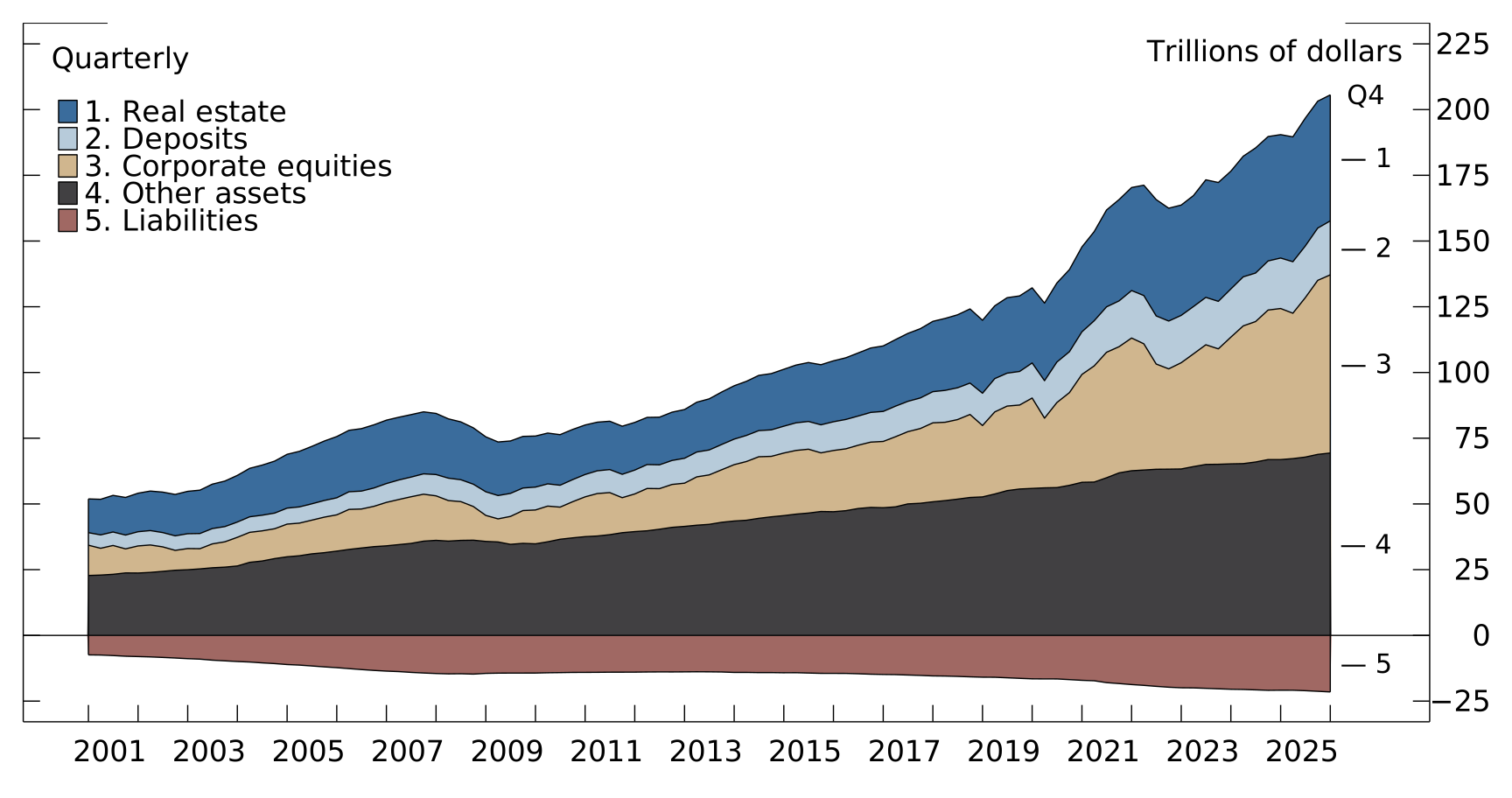
Note: Liabilities are shown as negative values. Corporate equities include directly and indirectly held securities. Deposits include money market fund shares. Real estate is the value of owner-occupied real estate. Other assets include consumer durable goods, fixed assets of nonprofit organizations, equity in noncorporate business and all other assets apart from those shown.
Source: Financial Accounts of the United States, March 19, 2026.
Figure 2: Ratio of household net worth to DPI
Source: Financial Accounts of the United States, March 19, 2026.
Accessible version | CSV | Data DictionaryTable 1: Condensed household balance sheet
Trillions of dollars
| 2022 | 2023 | 2024 | 2025 | 2025:Q2 | 2025:Q3 | 2025:Q4 | |
|---|---|---|---|---|---|---|---|
| Assets | 163.7 | 176.6 | 190.5 | 205.6 | 196.7 | 203.2 | 205.6 |
| Nonfinancial assets | 54.8 | 57.7 | 60.1 | 61.7 | 62 | 62 | 61.7 |
| Owner-occupied real estate | 42 | 44.8 | 46.9 | 47.9 | 48.6 | 48.3 | 47.9 |
| Other nonfinancial assets | 12.8 | 12.9 | 13.2 | 13.8 | 13.4 | 13.7 | 13.8 |
| Financial assets | 108.9 | 118.9 | 130.4 | 143.8 | 134.7 | 141.2 | 143.8 |
| Deposits and money market funds | 18 | 18.3 | 19.2 | 20.5 | 19.7 | 19.9 | 20.5 |
| Debt securities | 9.4 | 10.7 | 11.3 | 12.1 | 11.7 | 11.9 | 12.1 |
| Corporate equities | 40.4 | 48.2 | 57.5 | 67.8 | 60.6 | 66.2 | 67.8 |
| Equity in noncorporate business | 16 | 15.6 | 15.8 | 16 | 15.8 | 16 | 16 |
| Defined benefit pension entitlements | 15.6 | 16.1 | 16.4 | 16.6 | 16.5 | 16.5 | 16.6 |
| Other financial assets | 9.5 | 10 | 10.2 | 10.8 | 10.5 | 10.7 | 10.8 |
| Liabilities | 19.9 | 20.5 | 20.8 | 21.5 | 21 | 21.3 | 21.5 |
| One-to-four-family residential mortgages | 12.7 | 13 | 13.4 | 13.8 | 13.6 | 13.7 | 13.8 |
| Consumer credit | 4.9 | 5 | 4.9 | 5.1 | 5 | 5 | 5.1 |
| Other liabilities | 2.4 | 2.5 | 2.5 | 2.6 | 2.5 | 2.6 | 2.6 |
| Net worth | 143.7 | 156.1 | 169.6 | 184.1 | 175.7 | 181.9 | 184.1 |
Source: Financial Accounts of the United States, March 19, 2026.
The major components of household wealth are shown in table 1. On the asset side of the household balance sheet, owner-occupied real estate ($47.9 trillion) accounts for most nonfinancial assets. Financial assets include deposits ($20.5 trillion), directly and indirectly held equity shares ($67.8 trillion) and debt securities ($12.1 trillion), and other assets such as equity in noncorporate business ($16.0 trillion) and defined benefit pension plan entitlements ($16.6 trillion).2 On the liability side, home mortgages ($13.8 trillion) and consumer credit ($5.1 trillion) account for most of household debt.3 A more detailed balance sheet is shown in the Financial Accounts on tables B.101 and B.101.e.
The $2.2 trillion increase in household net worth in the fourth quarter reflects both net transactions and revaluations.4 Transactions occur when households purchase or sell assets, or when they incur or pay down liabilities. Revaluations arise from changes in the market value of assets that households already own—for example, when stock prices or real estate prices change. In the fourth quarter, the value of directly and indirectly held equity increased by $1.6 trillion, deposits increased by $0.6 trillion, and the value of real estate decreased by $0.4 trillion. For more details on changes in household net worth, see table R.101.
Changes in household net worth are often driven by revaluations of corporate equity and real estate, which represent the largest components of household wealth. Because the ownership of such assets—particularly equities—is concentrated among higher-income households, not all households are equally impacted by changes in asset prices. For more information on the distribution of household wealth, see the Distributional Financial Accounts.
Figure 3: Changes in household net worth
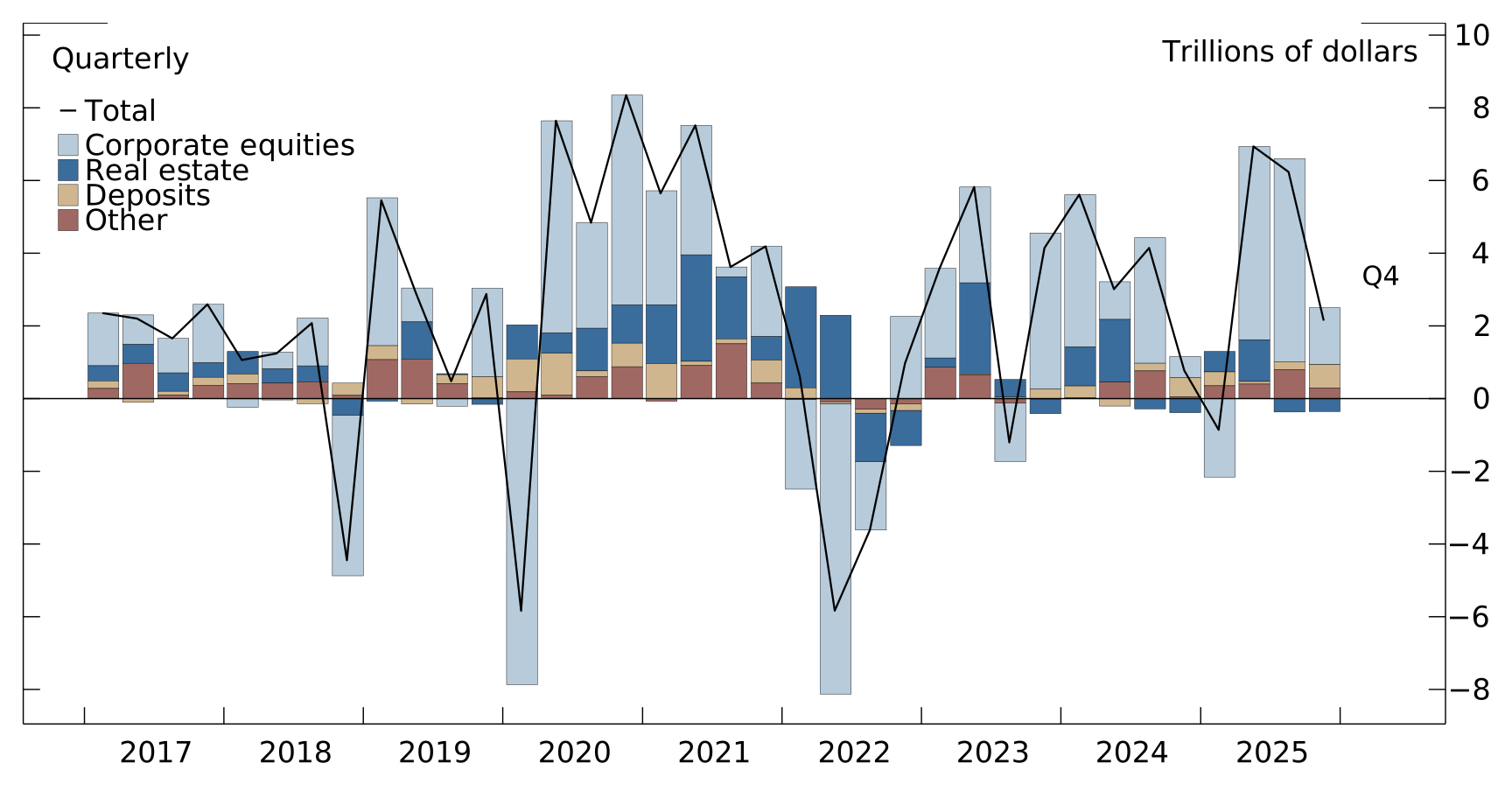
Note: Corporate equities include directly and indirectly held securities. Deposits include money market mutual fund shares. Real estate is the value of owner-occupied real estate. Other assets include consumer durable goods, fixed assets of nonprofit organizations, equity in noncorporate business and all other assets apart from those shown, net of liabilities.
Source: Financial Accounts of the United States, March 19, 2026.
Total domestic nonfinancial debt
Total domestic nonfinancial debt expanded 4.9% in the fourth quarter (this and subsequent rates of growth are reported at a seasonally adjusted annual rate), consistent with its average post-coronavirus (COVID-19) pandemic pace.5
Table 2: Growth of domestic nonfinancial debt by sector
Percent change, seasonally adjusted annual rate
| 2022 | 2023 | 2024 | 2025 | 2025:Q2 | 2025:Q3 | 2025:Q4 | |
|---|---|---|---|---|---|---|---|
| Total | 5.6 | 5.1 | 4.7 | 5.2 | 3.2 | 8.8 | 4.9 |
| Households | 6.6 | 2.8 | 3.1 | 3.5 | 4.1 | 4.3 | 3.3 |
| Nonfinancial business | 5.3 | 2.1 | 3.1 | 3.8 | 3.9 | 3.9 | 2.4 |
| Corporate | 4.1 | 2 | 3.4 | 4.2 | 4.5 | 4.4 | 1 |
| Noncorporate | 7.6 | 2.3 | 2.6 | 3.2 | 2.7 | 2.9 | 4.8 |
| Federal government | 6.1 | 9.8 | 7.3 | 7.3 | 1.5 | 15.5 | 8.1 |
| State and local governments | -1.2 | 0.5 | 2.8 | 4.8 | 8.5 | 5.5 | 0.6 |
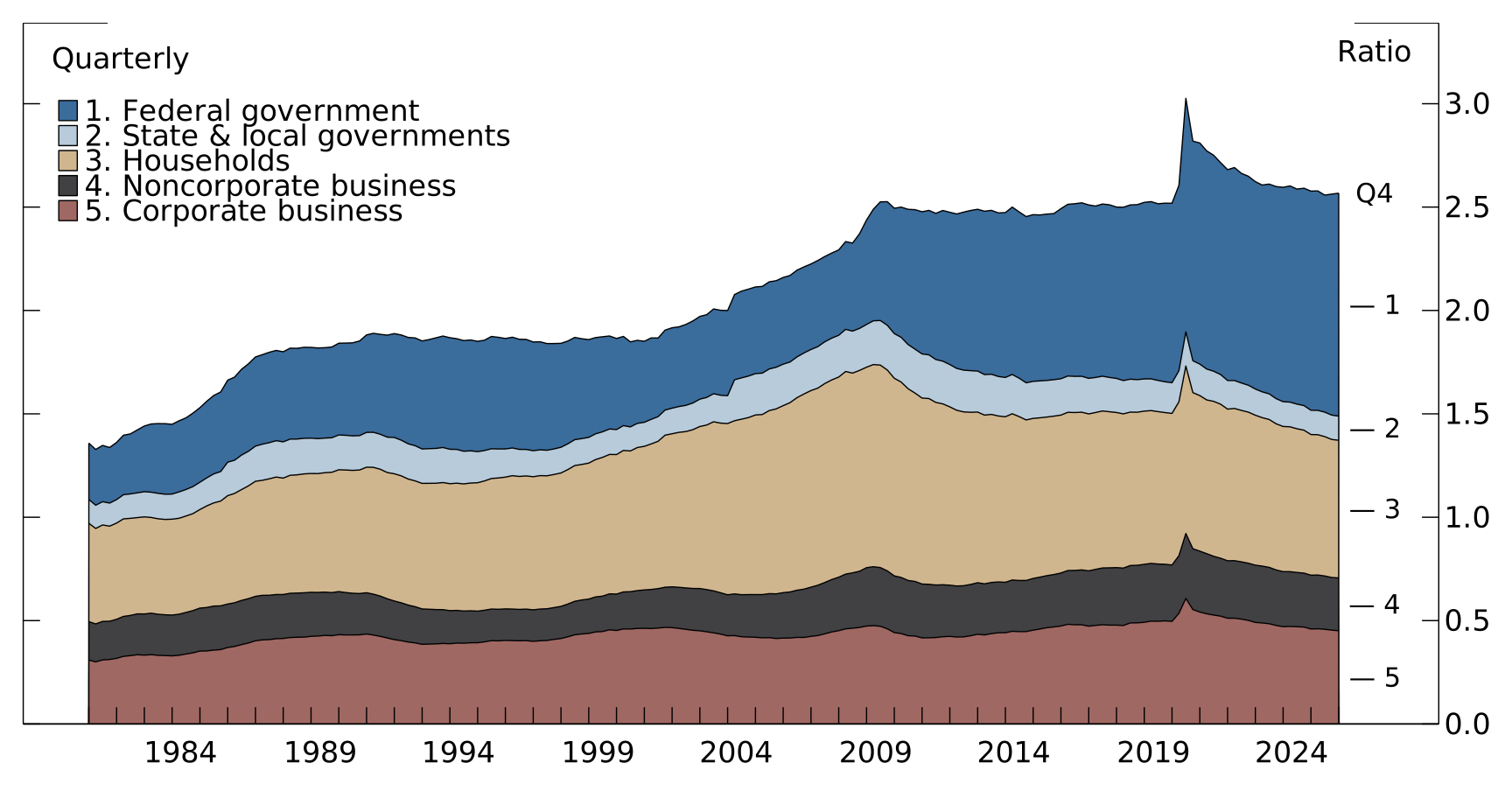
Domestic nonfinancial debt outstanding was $80.7 trillion at the end of the fourth quarter, of which household debt was $20.9 trillion, nonfinancial business debt was $22.2 trillion, and total government debt was $37.6 trillion. The ratio of total nonfinancial debt to gross domestic product (GDP) stayed flat at 2.57 in the fourth quarter (figure 4), as both debt and GDP expanded at similar rates. The ratio has declined substantially since its pandemic-related spike in 2020, but remains slightly above its pre-pandemic average. For more data on nonfinancial debt, see tables D.1, D.2, and D.3.
Table 3: Domestic nonfinancial debt outstanding by sector
Trillions of dollars, seasonally adjusted
| 2022 | 2023 | 2024 | 2025 | 2025:Q2 | 2025:Q3 | 2025:Q4 | |
|---|---|---|---|---|---|---|---|
| Total | 70.2 | 73.8 | 76.9 | 80.7 | 78 | 79.7 | 80.7 |
| Households | 19.4 | 20 | 20.3 | 20.9 | 20.5 | 20.8 | 20.9 |
| Business | 20.6 | 20.9 | 21.5 | 22.2 | 21.8 | 22 | 22.2 |
| Corporate | 13.2 | 13.4 | 13.7 | 14.2 | 14 | 14.1 | 14.2 |
| Noncorporate | 7.4 | 7.6 | 7.8 | 8 | 7.9 | 7.9 | 8 |
| Federal government | 26.9 | 29.5 | 31.6 | 33.9 | 32 | 33.2 | 33.9 |
| State and local governments | 3.4 | 3.4 | 3.5 | 3.7 | 3.6 | 3.7 | 3.7 |
Figure 4: Ratio of nonfinancial debt to GDP
Source: Financial Accounts of the United States, March 19, 2026.
Accessible version | CSV | Data DictionaryHousehold debt
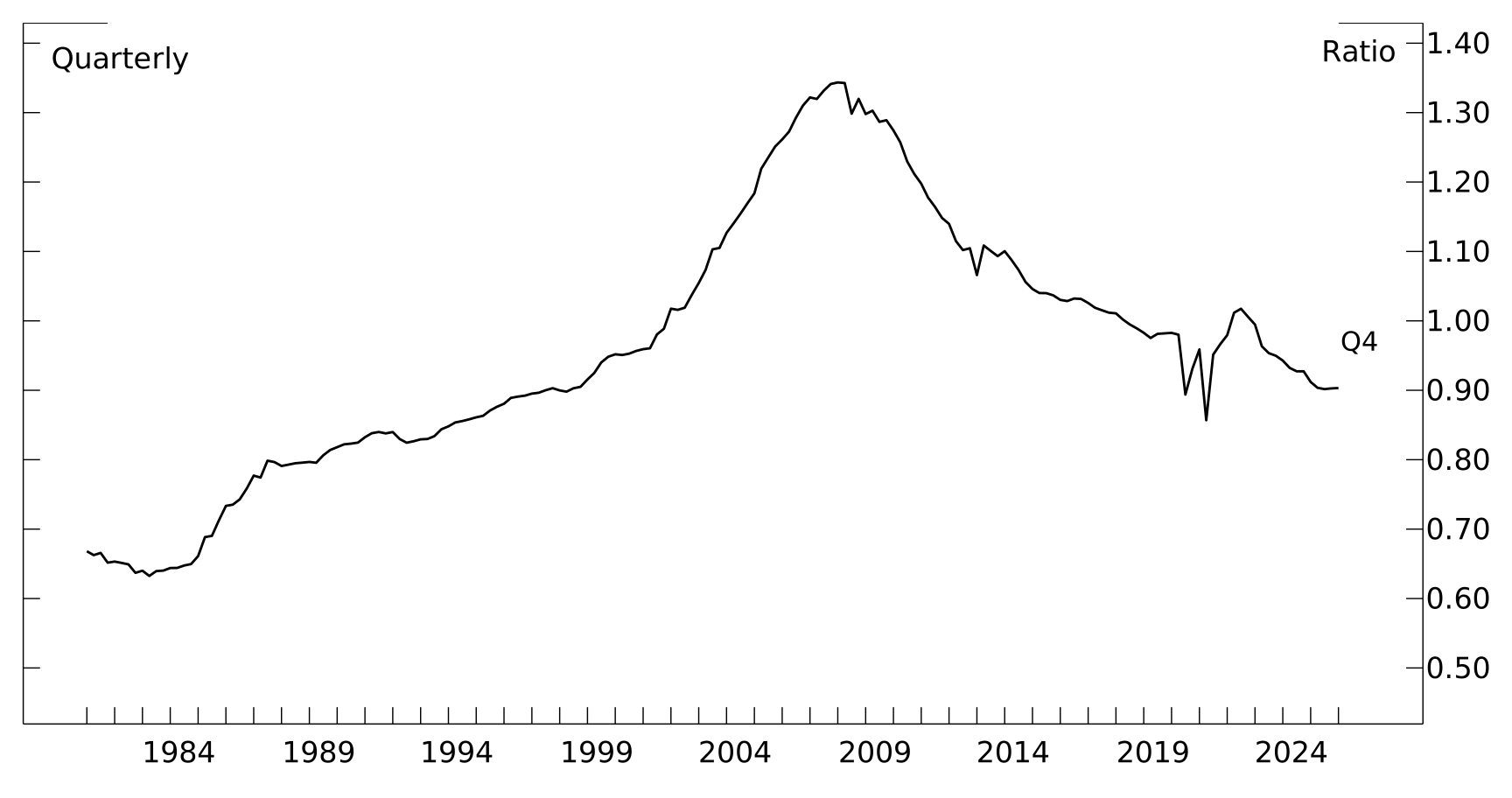
Household debt expanded rapidly in the immediate aftermath of the pandemic, but the pace of growth has slowed substantially over the past few years. In the fourth quarter, household debt increased by 3.3% amid slightly slower growth of mortgage debt and steady growth of nonmortgage consumer credit (figure 5). The ratio of household debt to DPI (figure 6) remained flat at 0.90, near its lowest level since the late 1990s (excluding the pandemic-related income effects in 2020 and 2021).
Figure 5: Changes in household debt
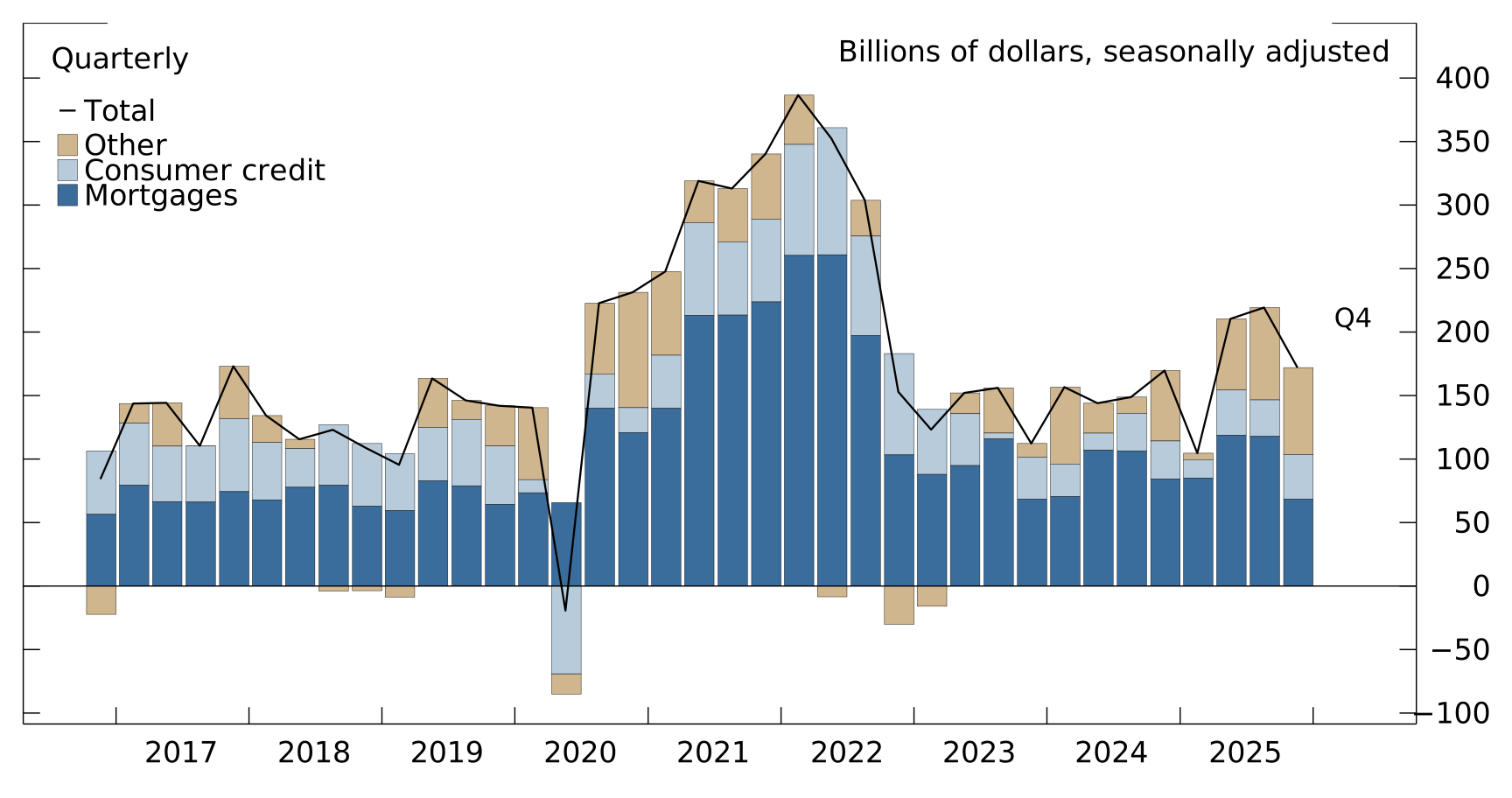
Note: Other debt includes nonmortgage depository loans, other loans and advances, and debt of nonprofit organizations.
Source: Financial Accounts of the United States, March 19, 2026.
Figure 6: Ratio of household debt to DPI
Source: Financial Accounts of the United States, March 19, 2026.
Accessible version | CSV | Data DictionaryNonfinancial business debt
In the fourth quarter of 2025, nonfinancial business debt expanded 2.4%, down from 3.9% in the previous quarter (table 2). This moderate pace is consistent with the trend in business debt growth since 2020, following its initial surge at the onset of the COVID-19 pandemic.
The nonfinancial corporate business sector consists of both publicly traded and privately owned nonfinancial corporations, and accounts for about two-thirds of nonfinancial business debt. Corporate debt was $14.2 trillion in the fourth quarter (figure 7). Corporate bonds amounted to $7.9 trillion, accounting for 56% of total corporate debt outstanding, while loans—including mortgage loans and nonmortgage loans—accounted for 38% of the total.
Figure 7: Components of nonfinancial corporate business debt

Note: Other debt securities are commercial paper and municipal securities (industrial revenue bonds).
Source: Financial Accounts of the United States, March 19, 2026.
Nonfinancial corporate debt grew at a 1.0% pace in the fourth quarter (table 2), down from 4.4% in the previous quarter and well below its recent average. On a seasonally adjusted basis, net issuance of corporate bonds was $49.1 billion (figure 8), while mortgage debt rose by $6.9 billion. Other nonmortgage loans from depository and nondepository financial institutions increased by $5.2 billion. Additional detail on the composition of nonfinancial corporate business debt can be found on tables F.103 and L.103.
Figure 8: Changes in nonfinancial corporate business debt

Note: Other debt securities are commercial paper and municipal securities (industrial revenue bonds).
Source: Financial Accounts of the United States, March 19, 2026.
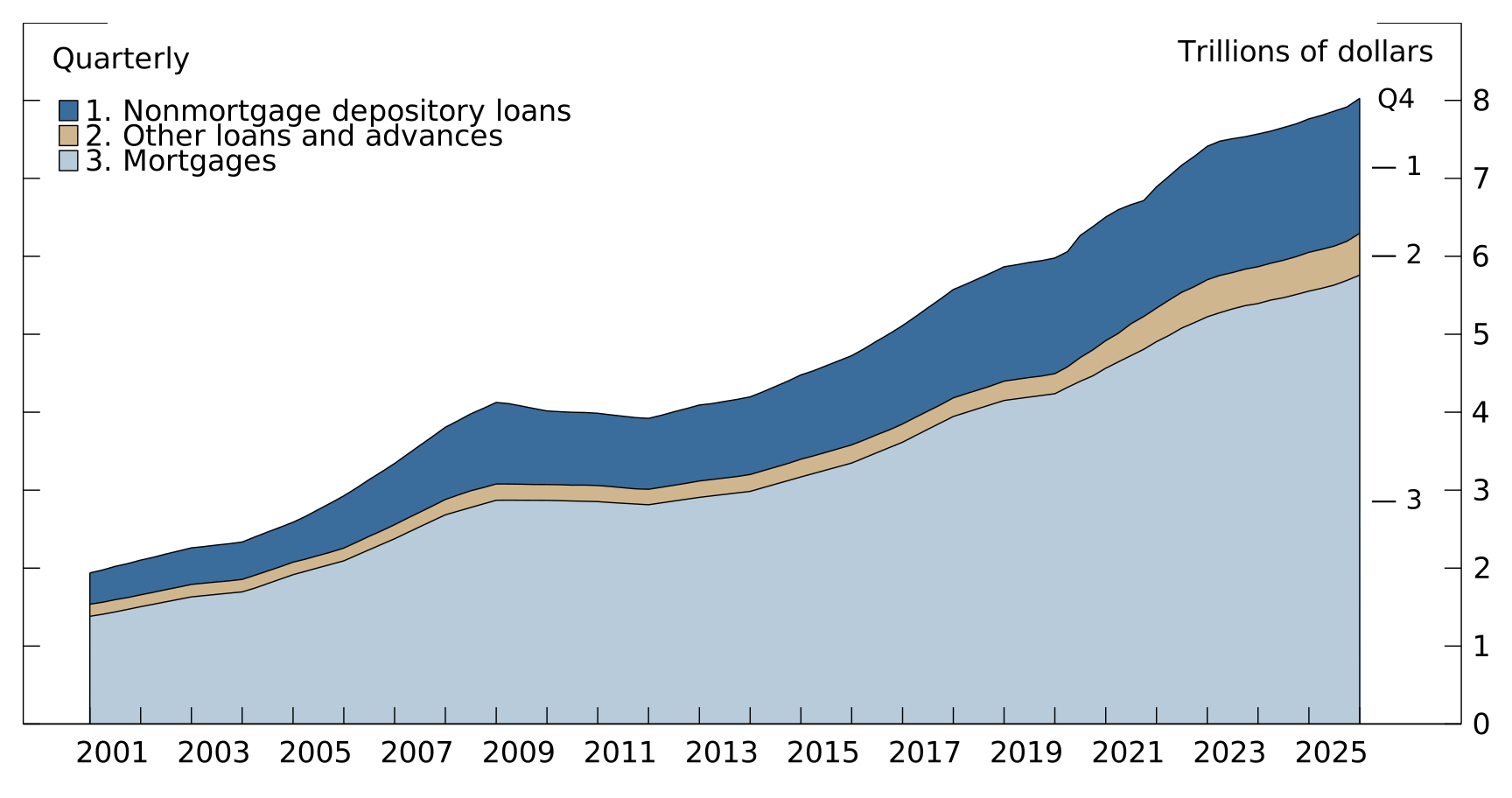
The nonfinancial noncorporate business sector consists mostly of smaller businesses, which are typically unincorporated. Noncorporate debt was $8.0 trillion in the fourth quarter (figure 9). Noncorporate debt is mainly composed of mortgage loans and nonmortgage depository loans. In the fourth quarter, mortgage loans accounted for 71.7% of noncorporate business debt, while nonmortgage depository loans accounted for most of the remainder.
Figure 9: Components of nonfinancial noncorporate business debt
Source: Financial Accounts of the United States, March 19, 2026.
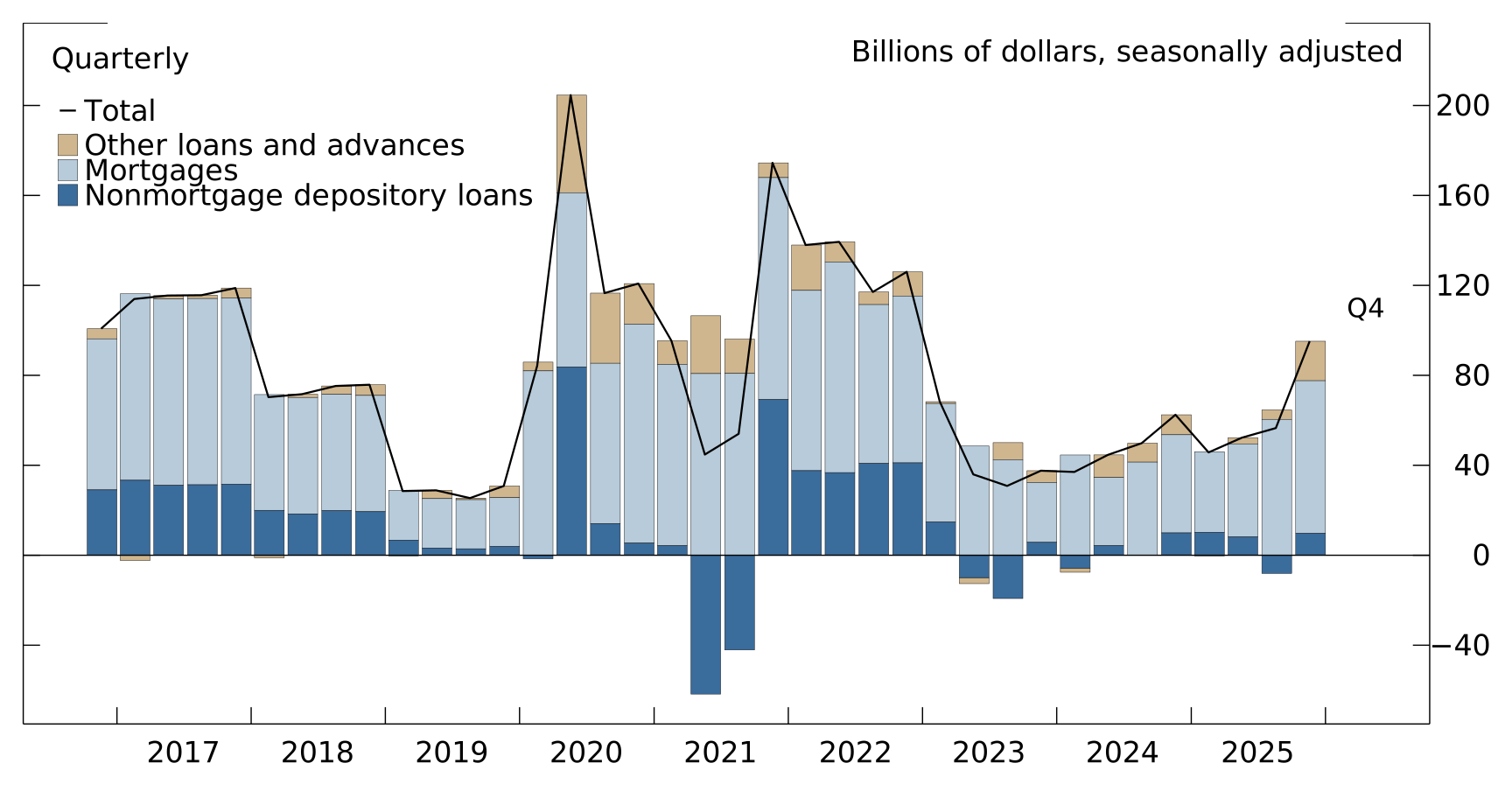
Accessible version | CSV | Data DictionaryNonfinancial noncorporate business debt grew at a 4.8% pace in the fourth quarter (table 2), a bit higher than its recent average. Additional detail on the composition of nonfinancial noncorporate business debt can be found on tables F.104 and L.104.
Figure 10: Changes in nonfinancial noncorporate business debt
Source: Financial Accounts of the United States, March 19, 2026.
Accessible version | CSV | Data DictionaryGovernment debt
The domestic government sector aggregates the federal government sector and the state and local government sector. The ratio of total government debt to GDP rose to 1.20 in the fourth quarter (figure 4).
Federal government debt, which includes marketable and nonmarketable Treasury securities, grew 8.1% in the fourth quarter (table 2) to $33.9 trillion (table 3), down from 15.5% in the previous quarter.
State and local government debt (table 3), which is mainly composed of long-term municipal securities, totaled $3.7 trillion in the fourth quarter. State and local government debt grew at a 0.6% pace (table 2) in the fourth quarter, down substantially from its recent average.
Coming soon
- Enhanced
Financial Accounts projects will be updated on Friday,
March 27, 2026, including the Distributional Financial
Accounts, which provide a quarterly estimate of the
distribution of U.S. household wealth.
- Financial Accounts data for the first quarter of 2026 will be published on Thursday, June 11, 2026, at 12:00 noon.
Because nonprofit organizations account for a small fraction of the assets and liabilities of the households and nonprofit organizations sector, the sector is commonly referred to as the “household sector.”↩︎
Indirectly held equity and debt securities are held in mutual funds, defined contribution pension funds, and life insurance products.↩︎
Consumer credit consists of credit card loans, auto loans, student loans, and other consumer credit.↩︎
Changes in net worth also reflect other changes in volume, which consist of statistical discontinuities and disaster-related losses to fixed assets.↩︎
The term “debt” refers to the aggregation of all debt securities and loans and excludes other liabilities.↩︎