

Monetary Policy
Chairman's Task Forces for Advancing Monetary Policy
The Federal Reserve has announced five task forces to examine areas central to the broad conduct of monetary policy.
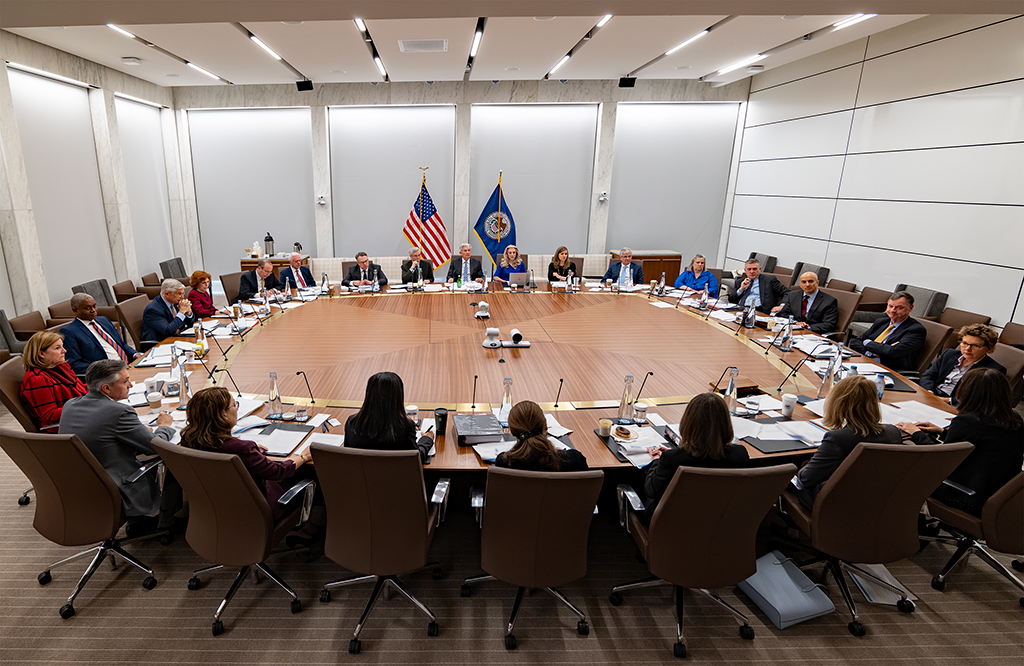
Monetary policy in the United States comprises the Federal Reserve's actions and communications to promote maximum employment, stable prices, and moderate long-term interest rates--the economic goals the Congress has instructed the Federal Reserve to pursue.
2025 Review of Monetary Policy Strategy, Tools, and Communications
In November 2024, the Federal Reserve announced additional information about the periodic review of its monetary policy strategy, tools, and communications—the framework it uses to pursue its congressionally-assigned goals of maximum employment and price stability.
Federal Open Market Committee
Upcoming Dates
Oct. 7 FOMC Minutes
Meeting of Sept. 15-16
Oct. 27-28 FOMC Meeting
Two-day meeting
Press Conference
Nov. 18 FOMC Minutes
Meeting of Oct. 27-28
Dec. 8-9 FOMC Meeting
Two-day meeting
Press Conference
Monetary Policy Principles and Practice
Six short notes on the principles of sound monetary policy and central banks' practices in setting and implementing monetary policy
Reports
Policy Normalization
Monetary Policy Operations and the Balance Sheet
Policy Tools
- Open Market Operations
- Discount Window and Discount Rate
- Reserve Requirements
- Interest on Reserve Balances
- Overnight Reverse Repurchase Agreement Operations
- Term Deposit Facility
- Central Bank Liquidity Swaps
- Foreign and International Monetary Authorities (FIMA) Repo Facility
- Standing Repurchase Agreement Operations
- Expired Policy Tools