

Industrial Production and Capacity Utilization - G.17
Industrial Production and Capacity Utilization: The 2025 Annual Revision PDF ASCII RSS DDP FRED
The Federal Reserve has revised its index of industrial production (IP) and the related measures of capacity and capacity utilization. The most prominent features of the revision are the incorporation of comprehensive annual production data from the U.S. Census Bureau's 2022 Economic Census (EC), a conversion of the industry-group indexes to the 2022 North American Industry Classification System (NAICS), a conversion of the product-group indexes used for benchmarking many of the series to the 2022 North American Product Classification System (NAPCS), and the integration of survey utilization rate data for 2024.[1]
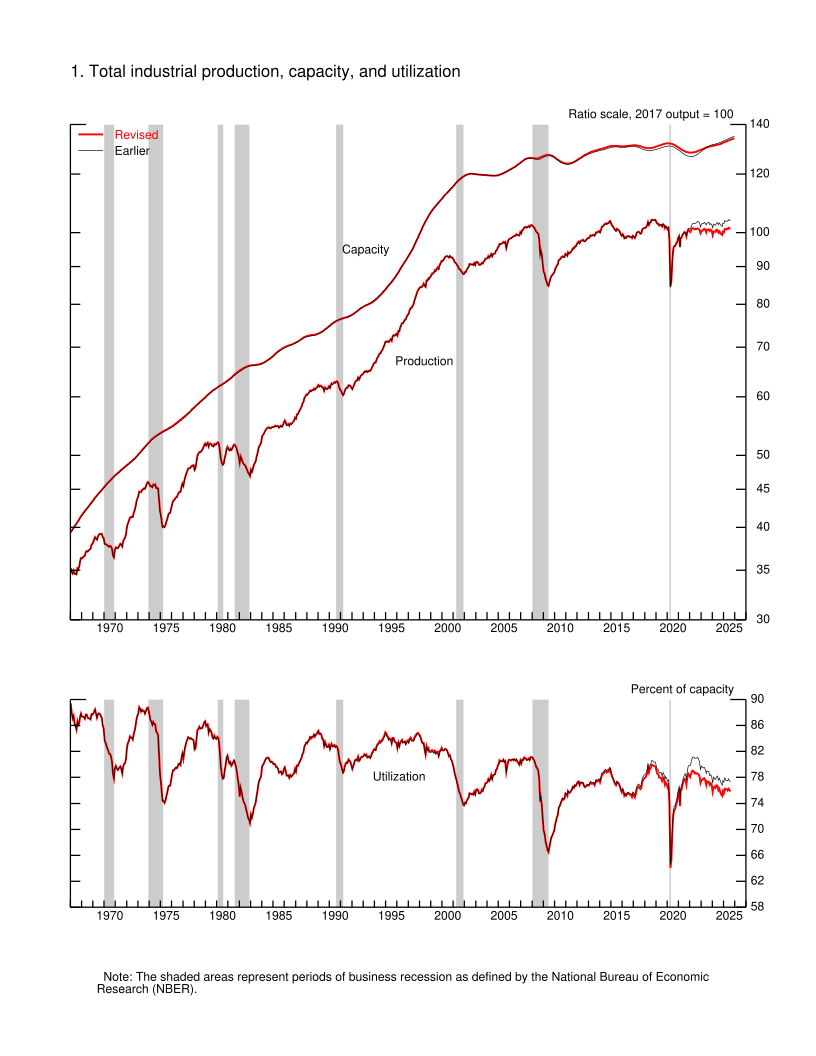
On net, the revisions to total IP for recent years are negative. The cumulative effect of these revisions leaves the level of total IP in August 2025 roughly equal to its level from February 2020, whereas IP was previously estimated to have increased 2.2 percent over that period. The largest revision to annual rates of change is in 2022, where the rate of change is revised down by 1.7 percentage points, while the revisions before 2022 are roughly offsetting on net.[2] After 2022, annual rates of change are revised up by 0.1 percentage point in 2023 and down by 0.7 percentage point in 2024.
The revisions to capacity growth for recent years are also negative; from 2022 through 2025, capacity growth is revised down in each year, with an average revision of 0.4 percentage point. The revisions from 2018 through 2021 are generally positive and average 0.1 percentage point per year. The cumulative effect of these downward revisions implies that capacity growth now averages 1.1 percent per year after 2021, revised down from 1.5 percent per year, and remains below the long-run historical average (1972–2024) of 1.9 percent.
As with IP and capacity, capacity utilization revised down in recent years. For the 2022–24 period, capacity utilization was 1.7 percentage points lower on average (annual utilization rates are reported as of the fourth quarter). Capacity utilization also revised down modestly in the previous 10 years (2012–21) by, on average, 0.5 percentage point. In the fourth quarter of 2024, capacity utilization for total industry stood at 75.5 percent, 1.7 percentage points below its previous estimate and 4.0 percentage points below its long-run (1972–2024) average.
This revision incorporated newly available annual data on both output and prices. The updated IP indexes incorporated new data for manufacturing from the 2022 EC. In addition, the indexes for metallic and nonmetallic minerals were updated with revised annual data for 2020 through 2022 and with new data for 2023 from the U.S. Geological Survey (USGS). Data on prices for 2022 from the Bureau of Labor Statistics (BLS) were also incorporated into most of the manufacturing indexes.
Revisions to IP indexes for the post-2022 period are based partly on adjustments to the correction factors that are intended to align the input and product data used for estimating monthly IP with the annual benchmark data. In addition, the monthly estimates of production have been updated to include late-arriving or revised quarterly or monthly indicator data, including information from the BLS's benchmark revisions to the Current Employment Statistics. The monthly IP estimates also reflect updated seasonal factors.
The revised estimates of capacity and capacity utilization incorporate data from the Census Bureau's Quarterly Survey of Plant Capacity Utilization (QSPC) for the fourth quarter of 2024 and new data on capacity from the USGS, the Energy Information Administration, and various industry organizations. The revised capacity estimates also include new data on capital spending from the 2022 EC.
RESULTS OF THE REVISION
Industrial Production
Production by Industry Group
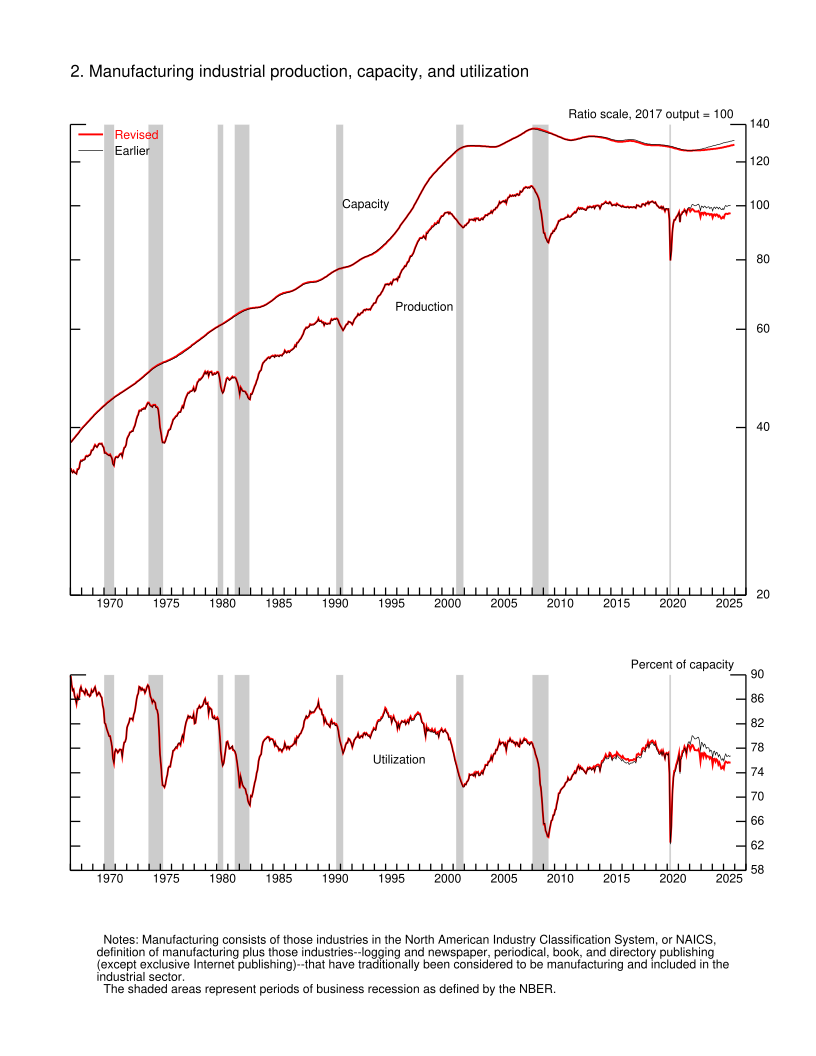
Manufacturing output is now estimated to have fallen about 2-1/2 percent in 2020 before rebounding about 2-3/4 percent in 2021 and then declining at an average pace of about 1-1/4 percent per year from 2022 through 2024. The annual rate of change is revised down by about 3/4 percentage point per year from 2020 through 2024, on average, with the largest downward revision occurring in 2022. These revisions noticeably change the post-2020 contour of manufacturing output, with a weaker 2021 recovery followed by a decline in 2022 rather than further growth that year, as was previously estimated. The cumulative effects of these revisions leave the level of manufacturing output in August 2025 about 1-1/2 percent below its level from February 2020, whereas manufacturing output was previously estimated to have increased 1-1/2 percent, on net, over that period.
Downward revisions to manufacturing output are evident in each of the manufacturing industry groups, though the most notable contributions to overall revisions were made by nondurable goods indexes. The annual rates of change of nondurable goods revised down by about 3/4 percentage point, on average, from 2020 through 2024. The annual pattern of nondurables output is revised materially; in particular, the annual rate of change for 2022 is revised down by 3-1/2 percentage points, led by downward revisions to output growth for chemicals and for plastics and rubber products. For durable goods output growth, the annual pattern is broadly similar to previous estimates, though annual rates of change are also revised down by about 3/4 percentage point per year from 2020 through 2024 on average. The index for industries in scope for manufacturing IP that are not part of manufacturing under the NAICS—that is, logging and publishing—has been declining for much of its recent history; annual rates of change in this industry group are revised down by about 1/4 percentage point per year, on average, from 2020 through 2024.
The contour for mining output shows a sharp decline in 2020 then strong gains from 2021 through 2023 before a modest decline in 2024. Revisions to annual rates of change for mining output are slightly negative, on net, though the growth of the index in 2021 is revised up about 1/2 percentage point. The rates of change for utilities output are revised up modestly, on net, with little change to the annual contour.
Production by Market Group
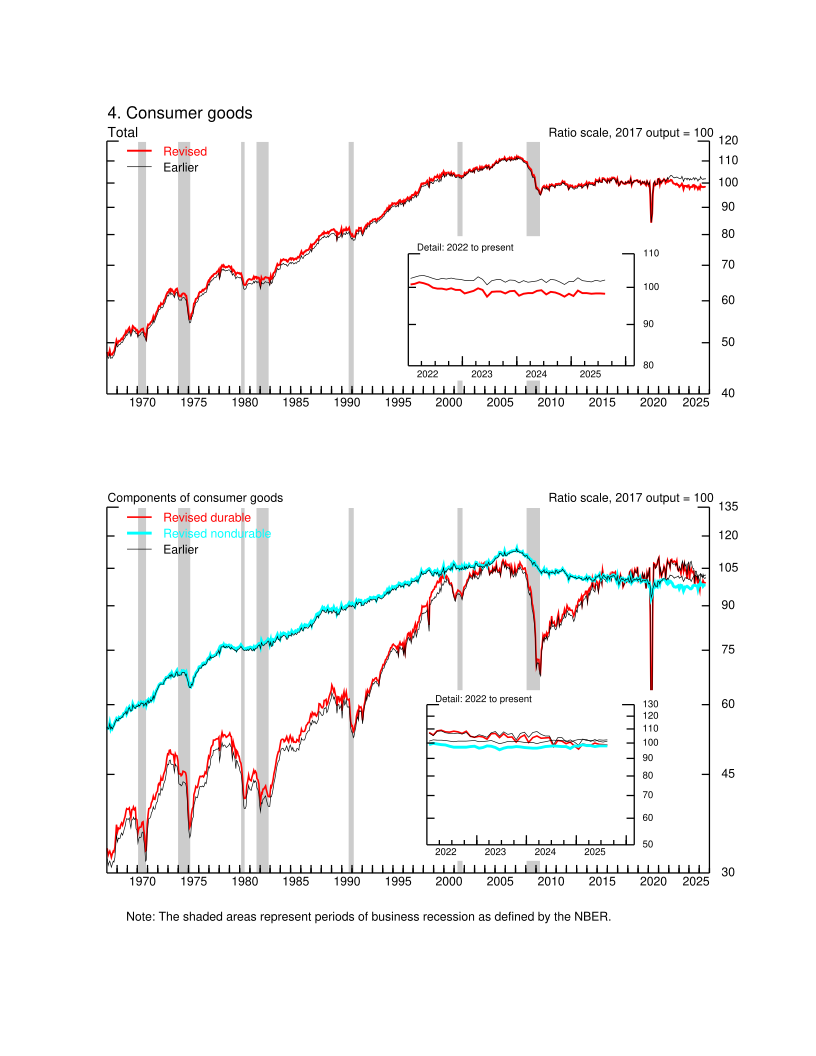
The index for consumer goods is estimated to have risen in 2020 and 2021 before falling from 2022 through 2024. The rates of change for the index are revised down, on net, across the 2020–24 period, with large negative revisions in 2021 and, especially, 2022. Annual growth in the output of durable consumer goods revised down about 1/4 percentage point from 2020 through 2024, on average, with negative revisions concentrated largely in 2023. Downward revisions to rates of change for nondurable consumer goods output are more substantial, averaging 3/4 percentage point during 2020 through 2024 and featuring particularly large negative revisions of about 1-1/2 percentage points and 2-1/2 percentage points in 2021 and 2022, respectively.
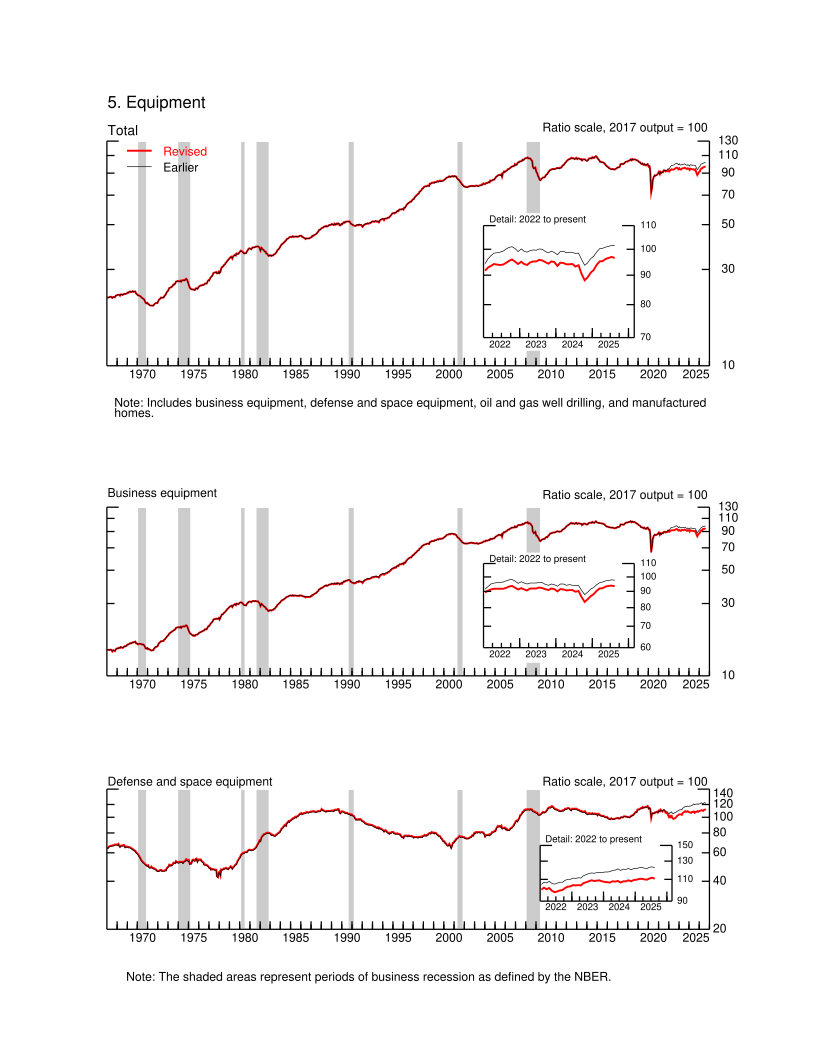
The index for business equipment fell significantly in 2020, recovered strongly in 2021 and 2022, and then fell in 2023 and, especially, 2024. Annual rates of change for business equipment were revised down by about 1 percentage point per year, on average, from 2020 through 2024, with a particularly large downward revision of about 3-3/4 percentage points in 2022. The index for defense and space equipment is revised down by about 2-1/4 percentage points per year, on average, from 2020 through 2024, with downward revisions in every year.
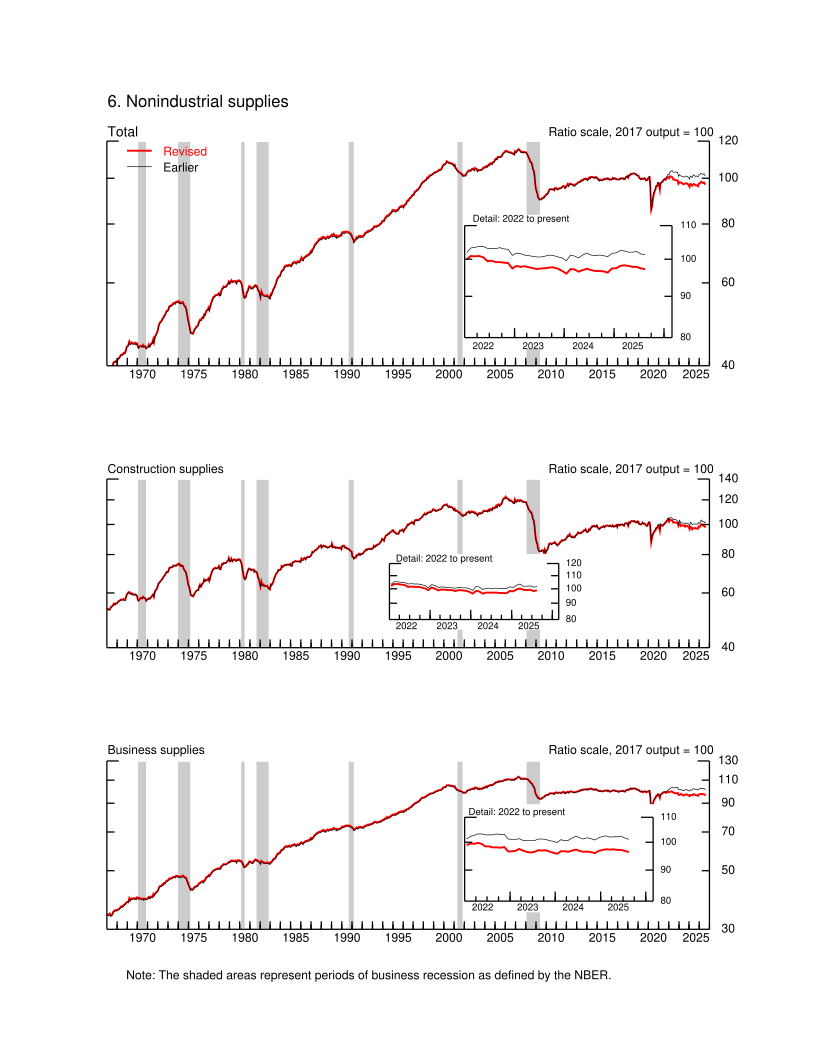
The indexes for construction supplies and business supplies are estimated to follow a similar contour to each other, falling in 2020, rising in 2021, and then declining each year from 2022 through 2024. Annual rates of change for the output of construction supplies and of business supplies are revised down by an average of about 1/2 percentage point and 1 percentage point, respectively, from 2020 through 2024.
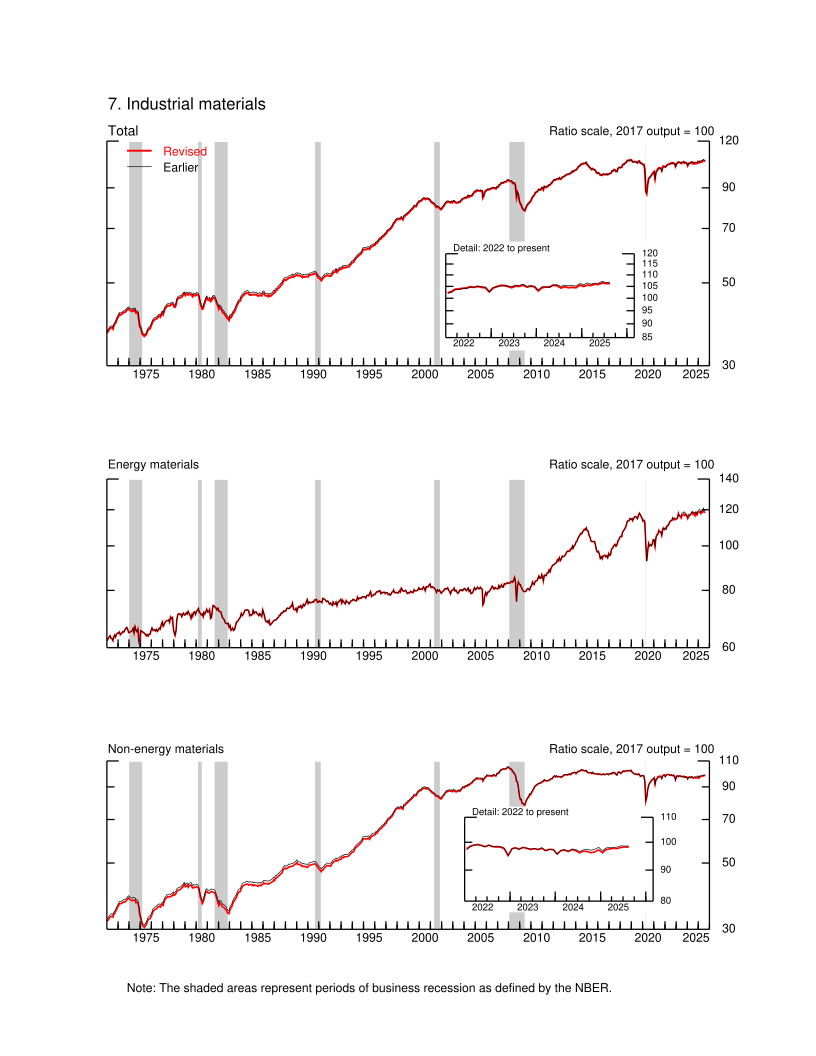
The index for materials is estimated to have dropped in 2020 before rising throughout 2021 and through 2024, a pattern that is revised down modestly on average. Within materials, annual rates of change for non-energy materials are revised down modestly, on average, led by durable non-energy materials. Annual rates of change for energy materials are revised down on average.
Capacity
Total industrial capacity is estimated to have risen at a modest pace from 2022 through 2025, with capacity, on average, increasing in manufacturing, mining, and utilities. Overall capacity is expected to rise 1-1/2 percent in 2025. Annual industrial capacity growth is revised down by an average of about 1/2 percentage point per year from 2022 through 2025, with the largest downward revision of about 1 percentage point occurring in 2023.
Manufacturing capacity is estimated to have grown about 1/2 percent per year, on average, from 2022 through 2025—a pace that is well below the long-run (1972–2024) average growth of about 2 percent per year. Capacity growth has increased sequentially from 2022 through 2025, and growth in 2025 is expected to be just over 1 percent. Average annual growth is revised down by about 1/2 percentage point per year from 2022 through 2025, with negative revisions to both durable goods and nondurable goods but positive revisions, on average, to other manufacturing.
Mining capacity is estimated to have risen in the 2022–24 period before modestly declining in 2025, resulting in an average annual growth rate of about 1-1/4 percent, above the long-run (1972–2024) average pace. Mining capacity is expected to decline about 1/4 percent in 2025. The annual rate of change for mining capacity is revised down by about 1/2 percentage point per year, on average, from 2022 through 2025, with a larger downward revision in 2023.
Capacity for electric and gas utilities rose at a solid pace of about 3-1/4 percent per year, on average, from 2022 through 2025—a pace that is faster than the long-run (1972–2024) average growth rate of about 2-1/4 percent per year. Utilities capacity is expected to grow about 4-1/2 percent in 2025. Revisions to the annual rates of utilities capacity growth were small on average.
Capacity Utilization
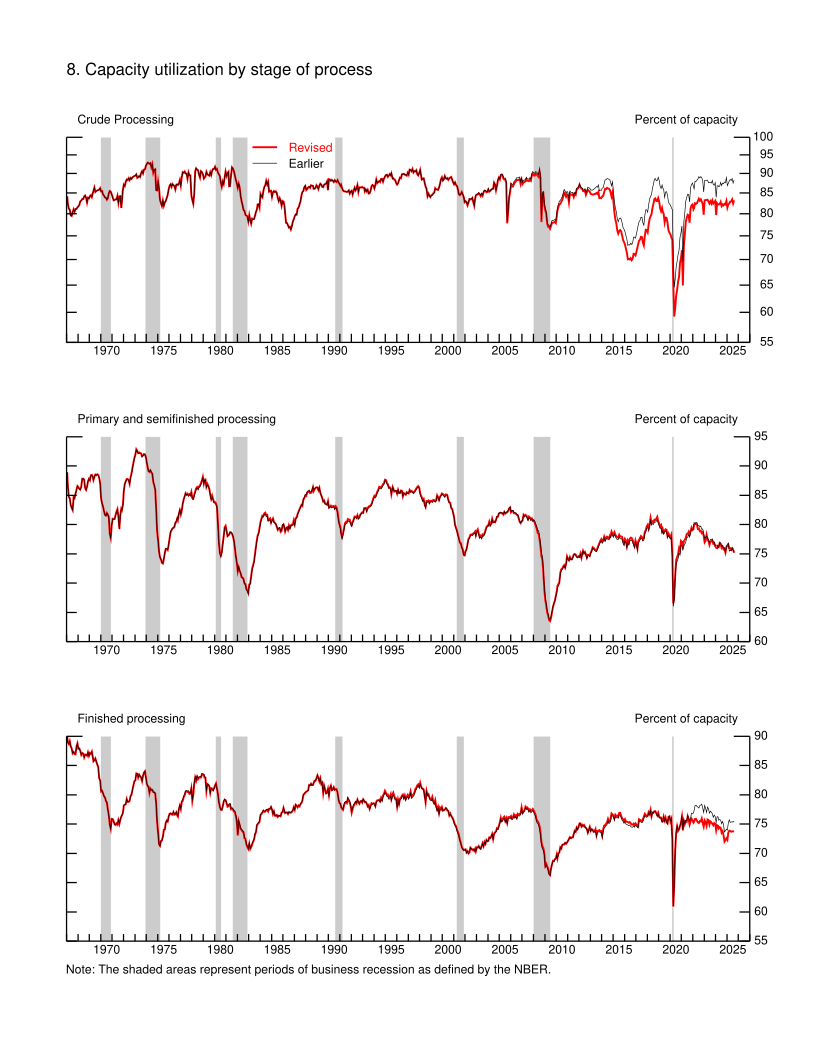
Capacity utilization for total industry moved down in 2020 to 74.5 percent, jumped to 78.3 percent in 2021, and then declined steadily to 75.5 percent in 2024, about 4 percentage points below its long-run (1972–2024) average of 79.5 percent. On average, utilization is revised down about 1-1/2 percentage points from 2021 through 2024. In August 2025, capacity utilization is estimated to have stood at 75.8 percent.
Capacity utilization at manufacturers rose to 78.4 percent in 2021—roughly matching its long-run (1972–2024) average of 78.2 percent—and then declined, reaching 74.8 percent in 2024. Manufacturing utilization between 2021 and 2024 is revised down about 1-1/4 percentage points on average. In August 2025, manufacturing utilization stood at 75.6 percent.
Within manufacturing, revisions to capacity utilization rates in 2024 were mostly negative across industries. In durables manufacturing, utilization is revised down by about 1-1/4 percentage points, on average, from 2021 through 2024, with widely varying revision patterns across industries. Of particular note, the indexes for machinery and for transportation equipment made large contributions to negative revisions, while the index for electrical equipment, appliances, and components made partly offsetting positive contributions. In nondurables manufacturing, utilization is revised down by about 1-1/4 percentage points, on average, from 2021 through 2024. Of particular note, the index for chemicals made large contributions to negative revisions.
The capacity utilization rate for mining jumped to 81.5 percent in 2021 and rose thereafter to 83.4 percent in 2024, lower than its long-run (1972–2024) average rate of 85.2 percent. Utilization at mines is revised down by about 6 percentage points, on average, from 2021 through 2024, driven largely by lower utilization in oil and gas extraction and in support activities for mining.
The operating rate for electric and gas utilities has been well below its long-run (1972–2024) average of 84.3 percent since 2007 and stood at 72.2 percent in 2024; utilization in utilities is revised up by about 1 percentage point, on average, between 2021 and 2024.
TECHNICAL ASPECTS OF THE REVISION
The IP indexes represent the level of real output relative to a base year. At the monthly frequency, movements of the indexes are based on indicators that are derived using industry-specific data from a variety of government and private sources.
The monthly production indexes are anchored to annual benchmarks that are less timely but typically based on more comprehensive data. In most cases, the annual benchmark is the nominal gross output reported by the Census Bureau deflated by a suitable price index.
Annual revisions to the IP and capacity measures generally involve (1) incorporating new and revised annual benchmark data on output, prices, and value-added proportions; (2) incorporating new monthly or quarterly data that were revised or that arrived too late to be included in the regular six-month reporting window for monthly IP; (3) updating seasonal adjustment factors; (4) updating the methods used to construct the indexes; and (5) introducing changes to the industry- or market-group structure of the indexes based on changes to underlying data sources.
Because the current annual revision incorporates an EC, it includes more innovations and updates than are typical. In particular, the current revision reclassifies the IP and capacity indexes from the 2017 NAICS to the 2022 NAICS, updates the aggregation weights for some IP indexes to incorporate data on product shipments based on the 2022 NAPCS rather than the previously used 2017 NAPCS-based shipments, and updates the allocations of IP industry-group indexes to market groups based on the Bureau of Economic Analysis's (BEA) 2017 input-output (I-O) tables (the previous allocations were based on I-O tables through 2012).
Annual Benchmark Data on Output, Prices, and Value-Added Proportions
Output
The annual benchmark output indexes for IP are measures of real gross output at the six-digit NAICS (2022) level. The Census Bureau provides annual figures for value added and the cost of materials for manufacturing industries, which can be summed to obtain nominal gross output. The benchmark indexes for this revision incorporated information for 2022 from the EC.
New annual data were also incorporated into other indexes not in the scope of the EC. The benchmark indexes for metallic and nonmetallic mineral mining were updated with newly available data from 2020 through 2023 from the USGS. Benchmarks for logging and publishing were not advanced because of a lack of new data.
Prices
To obtain individual benchmarks of real gross output, the measures of nominal gross output are deflated by annual price deflators. In general, the benchmark industry price deflators consist of price indexes from the BEA through 2011 that are extended through 2022 with the related producer price indexes (PPIs) from the BLS.[3] However, for a few selected industries, the annual price deflators are constructed by the Federal Reserve.[4]
Value-Added Proportions (Weights for Aggregation)
The IP system is organized as a hierarchical structure where the individual production indexes are combined using a version of the Fisher ideal index formula to construct broader measures of production. The weights that are used to combine individual IP measures into more aggregate measures are based on the value added from the industry, calculated as gross output less cost of materials. For IP indexes that are defined at the six-digit (or more aggregate) NAICS level, the value-added weights are derived from either the EC or the Annual Survey of Manufacturers. For IP indexes that cover only part of a six-digit NAICS industry, the aggregation weights were constructed by allocating value added (as defined by the Census Bureau) for a six-digit industry across the various components of IP that compose that industry.
The allocation of value added across each component was determined by that component's share of the industry's overall product shipments. This annual revision used data on product shipments based on the new 2022 NAPCS; previously, data on product shipments were based on the 2017 NAPCS. Missing values for specific NAPCS-based products were imputed where necessary. The incorporation of NAPCS is discussed in more detail below.
The Federal Reserve derives estimates of value added for the electric and gas utility industries from annual revenue and expense data issued by other organizations. For electric utilities, the measures of value added incorporate data from the Energy Information Administration of the U.S. Department of Energy and from the Edison Electric Institute. For gas utilities, the value-added estimates incorporate data from the American Gas Association. The weights for aggregation for mining industries are derived from value-added data from the EC. Figures for value added for mining industries in the years between the quinquennial EC are estimated based on both output and price changes for the industry.
The weights for aggregation, expressed as value added per unit of output, were estimated with data on producer prices for the period after 2022.
Conversion to the 2022 North American Industry Classification System
IP and capacity utilization are structured to follow a single-industry classification system. With this revision, the IP and capacity indexes were classified according to the 2022 NAICS; previously, they were classified according to the 2017 NAICS. To maintain a consistent time series, the indexes were converted to the 2022 NAICS for the period from 1972 forward.
For the industrial sector, there were several differences between the 2017 and the 2022 NAICS. A few IP indexes were reclassified to reflect the new NAICS structure, including two previously unpublished indexes that were dropped because of the new structure. The reclassifications within the IP system include the following:
Gold and Silver Ore Mining
Two 2017 NAICS categories, gold ore mining (NAICS 212221) and silver ore mining (NAICS 212222), were combined into a single 2022 NAICS category: gold ore and silver ore mining (NAICS 212220). This consolidation did not affect the number of IP indexes, as the IP system maintained one index for silver ore mining and another index for gold ore mining under both the 2017 and 2022 NAICS. Benchmark data for mine production of gold and mine production of silver are available separately from the USGS, so the benchmarking of these indexes is not affected by the change to the NAICS structure. The monthly indexes are similarly informed by separate USGS data for gold and silver mining.
Hosiery, Sock, and Other Apparel Knitting Mills
Two 2017 NAICS categories, hosiery and sock mills (NAICS 31511) and other apparel knitting mills (NAICS 31519), were combined into a single 2022 NAICS category: apparel knitting mills (NAICS 31512). Because of (1) the lack of reliable product-level data tracking each index separately and (2) the small value-added proportion of each separate index, IP indexes separately tracking hosiery and sock mills (2017 NAICS 31511) and other apparel knitting mills (2017 NAICS 31519) were removed. An apparel knitting mills index will continue to be produced.
Cut and Sew Apparel Manufacturing
A single 2022 NAICS five-digit industry for cut and sew apparel manufacturing (except contractors) (NAICS 31525) was formed from three different five-digit industries under the 2017 NAICS: men's and boys' cut and sew apparel manufacturing (NAICS 31522); women's, girls', and infants' cut and sew apparel manufacturing (NAICS 31524); and other cut and sew apparel manufacturing (NAICS 31528). The IP system maintained one index for men's and boys' cut and sew apparel manufacturing and one combined index for women's, girls', and other cut and sew apparel manufacturing under the 2017 NAICS. Because of (1) the lack of reliable product-level data tracking each index separately and (2) the small value-added proportion of each separate index, these separate IP indexes have been removed. A combined index of cut and sew apparel manufacturing (except contractors) will continue to be produced.
Battery Manufacturing
Two 2017 NAICS categories, storage battery manufacturing (NAICS 335911) and primary battery manufacturing (NAICS 335912), were combined into a single 2022 NAICS category: battery manufacturing (NAICS 335910). This consolidation did not affect the number of IP indexes, as the IP system maintained separate indexes for storage battery manufacturing and primary battery manufacturing under both the 2017 and 2022 NAICS. Product-level shipments data from the Census Bureau, as well as data on lithium-ion battery production capacity from a private source, are used to construct benchmarks for the continuing indexes.
Automobile and Light Duty Motor Vehicle Manufacturing
Two 2017 NAICS categories, automobile manufacturing (NAICS 336111) and light truck and utility vehicle manufacturing (NAICS 336112), were combined into a single 2022 NAICS category: automobile and light duty motor vehicle manufacturing (NAICS 336110). This consolidation did not affect the number of IP indexes, as the IP system maintained two indexes for automobile manufacturing and light truck and utility vehicle manufacturing under both the 2017 and 2022 NAICS. Product-level shipments data from the Census Bureau and data from private sources are used to construct benchmarks for the continuing data. Detailed private data and staff estimates are used to inform the monthly indexes.
Paper Mills
Two 2017 NAICS categories, paper (except newsprint) mills (NAICS 322121) and newsprint mills (NAICS 322122), were combined into a single 2022 NAICS category: paper mills (NAICS 322120). This consolidation did not affect the number of IP indexes, as the IP system maintained one index for paper (except newsprint) mills and newsprint mills under both the 2017 and 2022 NAICS. Product-level shipments data from the Census Bureau are used to construct benchmarks for the continuing data. Detailed private data are used to inform the monthly indexes.
Publishing
Two 2017 NAICS categories—newspaper, periodical, book, and directory publishers (NAICS 5111) and other information services (NAICS 5191)—were combined into a single 2022 NAICS category: newspaper, periodical, book, and directory publishers (NAICS 5131). Despite the consolidation, benchmark data from the 2022 Service Annual Survey provided sufficient industry detail for the number and content of relevant IP indexes to remain the same. Each IP index linked to a 2022 NAICS code beginning with 5131 includes all activities that fall under the scope of the corresponding 2017 NAICS code beginning with 5111 and omits all activities that fall outside of that scope.
Conversion to the 2022 North American Product Classification System
As noted earlier, this annual revision uses data on product shipments classified by NAPCS to construct annual benchmarks and value-added weights for those IP indexes that are defined as subsets of a given six-digit NAICS industry. Product-shipment data are also used for updating market-group allocations.
For IP indexes that are more disaggregated than the six-digit NAICS level, the calculations for the benchmarks and value-added weights involve summing product shipments for all products associated with the particular IP index. This process is complicated for a few reasons. First, the NAPCS structure is independent of the NAICS structure, so a NAPCS-NAICS crosswalk was needed. Second, NAPCS products may be produced across multiple industries and sectors, so extra care was required to map the product to the appropriate IP index. Third, the non-nested structure of NAPCS and NAICS combined with numerous instances of nondisclosed data cells introduced an additional hurdle for imputations.
With this revision, annual benchmarks and value-added weights for relevant IP indexes were calculated at the level of 2022 NAPCS categories; previously, they were calculated based on the 2017 NAPCS. The Census Bureau produces a two-directional mapping between the 2017 and 2022 NAPCS codes. Where a 2017 NAPCS code was discontinued, the closest matching 2022 NAPCS code(s) produced within the relevant NAICS industry (or industries) was (were) included in product shipments for the benchmarks. Where data were not disclosed at the desired industry disaggregation, the closest appropriate industry aggregate for the product was used to construct the benchmarks.
Updating Market-Group Allocations
The IP market groups classify industrial output according to the expected use of the output. The categories of market groups are final products (consumer goods and equipment), intermediate products that are used as inputs outside of the industrial sector (construction and business supplies), and materials that are used as inputs within the industrial sector (materials). Most industries in the IP index have their output allocated to multiple market groups. For example, a large share of ice cream production is purchased by consumers, but a sizable share is also sold to restaurants and other businesses outside the industrial sector and, hence, is part of business supplies. The market group shares for the individual IP indexes are derived using relationships in the I-O tables issued by the BEA.
This revision updates the market-group assignments and shares based on the 2017 I-O tables. Previously, the market groups and weights had been based on the 1997, 2002, 2007, and 2012 versions of the tables. The incorporation of the 2017 I-O tables generally affected the market-group shares beginning in 2013. The shares are assumed to evolve linearly between each I-O table year and to be constant beginning with the last available year for the I-O tables.
In general, the output of an industry is not split among all of the possible market groups—just those to which a significant share (roughly 10 percent or more) of its output is destined. The I-O tables reported that a few industries sent their output to markets in amounts that surpassed that threshold for the first time in 2017. For these industries, the output was allocated to the newly important market in 2017 and in later years, and the output was also allocated to the market in previous years, with the shares for the earlier years reflecting the relatively smaller importance in the 1997, 2002, 2007, and 2012 I-O tables.
Revised Quarterly and Monthly Data
This revision incorporated source data on production, shipments, and inventories that became available or were revised after the regular six-month reporting window for monthly IP was closed. These data were released with too great of a lag to be included with monthly IP estimates but were available for inclusion in the annual revision.
Revised Seasonal Factors
The IP indexes are adjusted to remove from the underlying data the predictable movements related to timing, holiday, workday, and monthly or quarterly seasonal patterns. Individual indexes are adjusted using the Census X-13ARIMASEATS seasonal adjustment program. The seasonal factors are based on the full history of data back to 1972, where available.
Seasonal factors for indexes based on production-worker hours were updated with data through August 2025. The updated factors for the physical-product-based indexes used data through August 2025, where available.
Seasonal factors for unit motor vehicle assemblies have been updated, and projections through September 2026 are available on the Board's website at https://www.federalreserve.gov/releases/g17/mvsf.htm. These factors are based on production data through January 2025 and were revised back to January 2020. The seasonal factors explicitly incorporate the holiday schedule for the vehicle assembly lines specified in the latest collective bargaining agreements with domestic manufacturers. The seasonal factors identify production data from January 2024 and January 2025 as outliers due to unseasonably cold weather and the effect of snowstorms.
Methodological Changes to Individual Production and Capacity Indexes
Change in Source Data for One Production Index
The source data for the index for speed changers, industrial high-speed drive, and gear manufacturing and for mechanical power transmission equipment manufacturing (NAICS 333612 and NAICS 333613, respectively) have been updated. This index previously reflected data on shipments of gears from the American Gear Manufacturers Association (AGMA) in addition to data on production-worker hours. The AGMA report was discontinued, so beginning in 2022 the series is based on production-worker hours for the industry.
Consolidation of Individual Capacity Indexes for Textile Mills Manufacturing
Capacity estimates for the textile mills subsector have been consolidated to the three-digit NAICS level (NAICS 313). Previously, separate capacity series were maintained for fiber, yarn, and thread mills (NAICS 3131); fabric mills (NAICS 3132); and textile and fabric finishing and fabric coating mills (NAICS 3133). This methodological update reflects recent changes to the QSPC, which implemented a revised industry classification scheme with its new sample based on the 2022 NAICS. As a result, since the first quarter of 2025, QSPC data are no longer available at the four-digit NAICS level for these textile industries. The reclassification of the QSPC accounts for structural changes in the U.S. manufacturing landscape, where certain subsectors now represent a smaller share of economic activity than when the survey was initially designed.
Data Availability and Publication Changes
Files containing the revised data and the text and tables from this release are available on the Board's website at https://www.federalreserve.gov/releases/g17, as are updated data for the annual revision and for all of the regularly issued series on IP, capacity, and capacity utilization. Other changes are listed on the Board's website at https://www.federalreserve.gov/releases/g17/g17_revision_series.htm.
[1] The revision affected rates of change for IP from 1972 forward. When necessary to maintain consistency with any revisions to the data for 1972 and subsequent years, the levels of production for the years before 1972 were multiplied by a constant. However, the rates of change in IP for the years before 1972 were not revised. Utilization rates and capacity growth rates were revised minimally between 1968 and 1971 but were unchanged before then.
Return to text
[2] Rates of change are calculated as the percentage change in the seasonally adjusted index from the fourth quarter of the previous year to the fourth quarter of the year specified.
Return to text
[3] The BEA price deflators were discontinued at the six-digit NAICS level after 2011. Overall, at the industry level, the BEA and PPI measures are quite similar, as the BEA used weighted product-level PPIs to derive its industry-level shipments deflator.
Return to text
[4] For selected industries, the Federal Reserve constructs price indexes from alternative sources. These industries include computer storage device manufacturing (NAICS 334112), semiconductor and related device manufacturing (NAICS 334413), and pharmaceutical preparation manufacturing (NAICS 325412).
Return to text
G.17 Revision Release Tables:
- Chart 1: Total industrial production, capacity, and utilization
- Chart 2: Manufacturing industrial production, capacity, and utilization
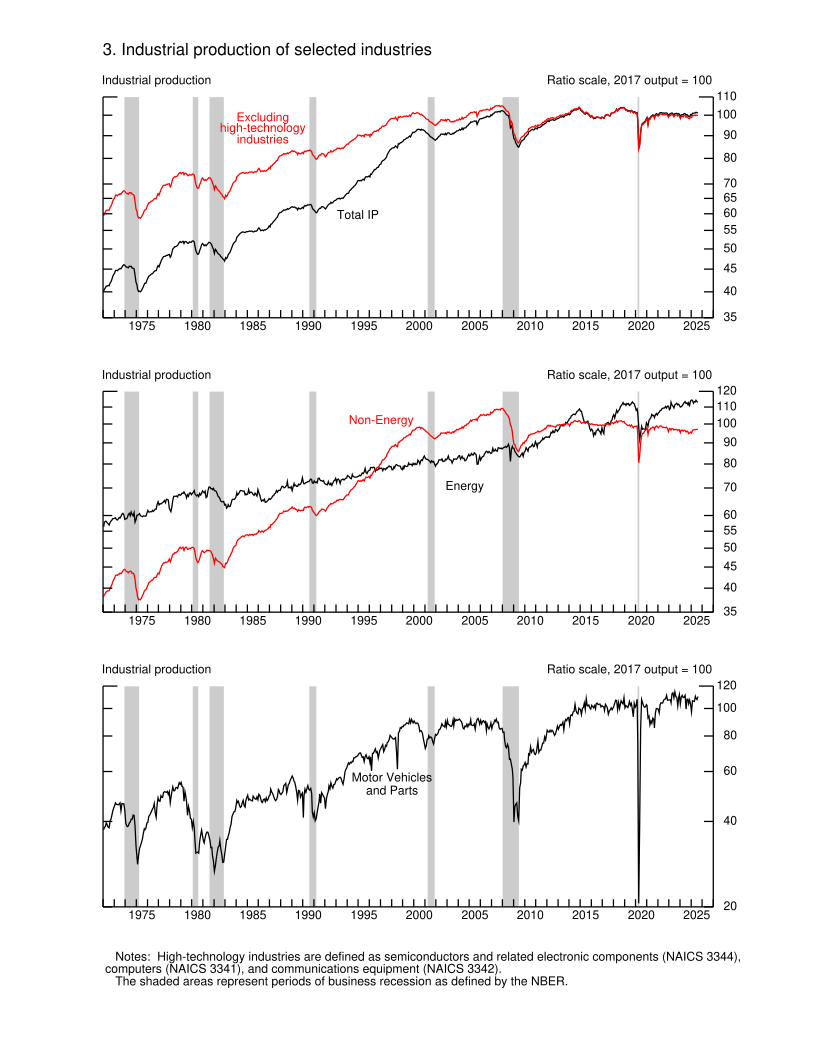
- Chart 3: Industrial production of selected industries
- Chart 4: Consumer goods
- Chart 5: Equipment
- Chart 6: Nonindustrial supplies
- Chart 7: Industrial materials
- Chart 8: Capacity utilization by stage of process
- Table 1A: Industrial Production: Total
- Table 1B: Capacity and Utilization: Total
- Table 2: Rates of Change in Industrial Production, Market and Industry Group Summary: 2020-24
- Table 3: Rates of Change in Industrial Production, Special Aggregates and Selected Detail: 2020-24
- Table 4: Annual Rates of Change for Industrial Production: 2020-24
- Table 5: Rates of Change in Capacity, By Industry Groups: 2021-25
- Table 6: Revised and Earlier Capacity Utilization Rates, By Industry Groups
- Table 7A: Industrial Production: Manufacturing
- Table 7B: Capacity and Utilization: Manufacturing
- Table 8: Annual Proportions in Industrial Production, Market and Industry Group Summary
- Table 9: Industrial Production and Capacity Utilization Summary