

Consumer and Community Affairs
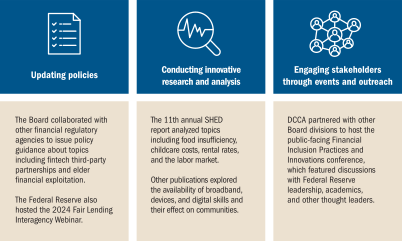
The Federal Reserve is committed to promoting fair and transparent financial service markets, protecting consumers' rights, and ensuring that its policies and research benefit from consumer and community perspectives. The Board promotes consumer protection, financial inclusion, and community development through targeted work in supervision, regulatory policy, research and analysis, and public engagement (see figure 6.1). This section discusses the Federal Reserve's key consumer and community affairs activities during 2024:
Figure 6.1. The Federal Reserve supported consumer protection and community development in 2024
The Federal Reserve's 2024 initiatives provided insight about emerging financial trends and economic conditions affecting consumers. See box 6.1 for more information about how DCCA advanced consumer protection and community development through events and outreach, research and analysis, and responsive supervisory guidance.
Accessible Version | Return to text
Note: SHED refers to the Board's annual Survey of Household Economics and Decisionmaking.
- formulating and carrying out supervision and examination policy in collaboration with the Federal Reserve System to promote compliance by financial institutions with consumer protection laws and regulations
- writing and reviewing regulations that implement consumer protection and community reinvestment laws
- conducting research, analysis, and data collection to identify and assess emerging consumer and community development issues and risks to inform policy decisions
- identifying issues and advancing effective community development by engaging, convening, and informing key stakeholders
To better understand consumer financial circumstances, the Federal Reserve conducted the yearly Survey on Household Economics and Decisionmaking (SHED) in October 2024. For more information on our consumer and community research, see "Consumer Research and Analysis of Emerging Issues and Policy" later in this section.
Consumer Compliance Supervision
The Federal Reserve's consumer protection supervision program assesses compliance by state member banks with a wide range of consumer protection laws and regulations including, but not limited to, the Truth in Lending Act (TILA), the Electronic Fund Transfer Act, the Equal Credit Opportunity Act (ECOA), the Fair Housing Act (FHA), and the prohibition on unfair or deceptive acts or practices (UDAP) in the Federal Trade Commission Act (FTC Act). The program also enforces these laws and regulations and reviews state member banks' performance under the Community Reinvestment Act (CRA).
The Board's Division of Consumer and Community Affairs develops policies that govern and establish requirements for oversight of the Reserve Banks' programs for consumer compliance and CRA supervision and examination of state member banks and bank holding companies (BHCs), as well as participating in some Large Institution Supervision Coordinating Committee initiatives.
In addition, the Board works with the prudential regulators and the Consumer Financial Protection Bureau (CFPB) as part of the supervisory coordination requirements under the Dodd-Frank Wall Street Reform and Consumer Protection Act (Dodd-Frank Act) and ensures that consumer compliance risk is appropriately incorporated into financial institutions' consolidated risk-management programs.
The Board also oversees the development and delivery of examiner training and supervision-related budget and technology efforts; analyzes bank and BHC applications related to consumer protection, convenience and needs, and the CRA; and oversees the handling of certain types of consumer complaints by the Reserve Banks and directly processes related appeals, in addition to processing constituent casework matters provided by congressional offices.
Consumer Compliance Examinations
Examinations are the Federal Reserve's primary method of promoting compliance with consumer protection laws and assessing the adequacy of consumer compliance risk-management systems within regulated entities.1
In 2024, the Board's regulatory efforts supported compliance by financial institutions by clarifying examination guidelines and procedures.2 In June, the Federal Reserve and its Federal Financial Institutions Examination Council (FFIEC) partners revised the guide to Home Mortgage Disclosure Act (HMDA) reporting.3 The updated guide summarizes key requirements to assist financial institutions complying with HMDA as implemented by the CFPB's Regulation C.
The Federal Reserve continued to monitor financial institutions for regulatory compliance. The Reserve Banks completed 394 examinations in 2024. The breakdown of consumer compliance examinations completed by Reserve Banks in 2024 included 204 consumer compliance examinations of state member banks.
Community Reinvestment Act Performance Evaluation and Regulations
The CRA requires that the Federal Reserve Board and the other federal banking agencies assess a bank's record of meeting the credit needs of its entire community, including low- and moderate-income neighborhoods, consistent with safe and sound operations. To carry out this mandate and to encourage banks to help meet the credit needs of the local communities in which they are chartered, the Federal Reserve
- examines state member banks and certain other financial institutions to assess their performance under the CRA,
- considers banks' CRA performance in context with other supervisory information when analyzing applications for mergers and acquisitions, and
- disseminates information about community development practices to bankers and the public through community development offices at the Reserve Banks.4
The Federal Reserve assesses and rates the CRA performance of state member banks and certain other institutions during performance evaluations conducted by staff at the 12 Reserve Banks. During the 2024 reporting period, the Reserve Banks completed 174 CRA examinations of state member banks. Of those banks examined, 23 were rated "Outstanding," 151 were rated "Satisfactory," none were rated "Needs to Improve," and none were rated "Substantial Non-Compliance."5
Consumer Compliance Enforcement Activities
Fair Lending and UDAP Enforcement
The Federal Reserve is committed to ensuring that the institutions it supervises comply fully with the federal fair lending and consumer protection laws, including ECOA, the FHA, and the FTC Act, which prohibits unfair or deceptive acts or practices. The ECOA prohibits creditors from discriminating against any applicant, in any aspect of a credit transaction, on the basis of race, color, religion, national origin, sex, marital status, or age. In addition, creditors may not discriminate against an applicant because the applicant receives income from a public assistance program or has exercised, in good faith, any right under the Consumer Credit Protection Act. The FHA prohibits discrimination in residential real estate–related transactions, including the making and purchasing of mortgage loans, on the basis of race, color, religion, sex, handicap, familial status, or national origin.
The Federal Reserve supervises all state member banks for compliance with the FHA. The Federal Reserve and the CFPB have supervisory authority for compliance with the ECOA. For state member banks with assets of $10 billion or less, the Board has the authority to enforce ECOA. For state member banks with assets over $10 billion, the CFPB has this authority.
With respect to the FTC Act, the Federal Reserve has supervisory and enforcement authority over all state member banks, regardless of asset size, and consults with the CFPB with regard to state member banks over $10 billion in assets. An act or practice may be found to be unfair if it causes or is likely to cause substantial injury to consumers that is not reasonably avoidable by consumers and is not outweighed by countervailing benefits to consumers or to competition. A representation, omission, or practice is deceptive if it is likely to mislead a consumer acting reasonably under the circumstances and is material, and thus likely to affect a consumer's conduct or decision regarding a product or service.6
With respect to fair lending, if the Board has reason to believe that a creditor has engaged in a pattern or practice of discrimination in violation of ECOA, the matter must be referred to the Department of Justice (DOJ). The DOJ reviews the referral and determines whether further investigation is warranted. A DOJ investigation may result in a public civil enforcement action. Alternatively, the DOJ may decide to return the matter to the Board for administrative action. If a matter is returned to the Board, staff ensure that the institution takes all appropriate corrective action. In 2024, the Board referred no fair lending matters to the DOJ.
If there is a fair lending violation that does not constitute a pattern or practice of discrimination or if there is a UDAP violation, the Federal Reserve takes action to ensure that the violation is remedied by the bank. The Federal Reserve uses a range of supervisory and enforcement tools, including nonpublic and public enforcement actions, to resolve any ECOA, FHA, or UDAP violations and ensure that the institution takes appropriate corrective action. For example, the Federal Reserve can also use informal supervisory tools such as memoranda of understanding between banks' boards of directors and the Reserve Banks to ensure that violations are corrected. When necessary, the Board can bring public enforcement actions.
When examiners find evidence of potential discrimination or potential UDAP violations, Board and Reserve Bank staff collaborate to provide additional legal and statistical expertise and ensure that fair lending and UDAP laws are enforced consistently and rigorously throughout the Federal Reserve System.
In July 2024, the Board announced the issuance of a public enforcement action for numerous UDAP violations, compliance risk-management deficiencies, and Bank Secrecy Act-related concerns. The UDAP violations related to unfair and deceptive practices involving the marketing, selling, and servicing of prepaid debit card products and to deceptive practices related to tax return preparation payment services. The consent order assessed a civil money penalty in the amount of $44 million and required the institution to take various other corrective actions.7
Given the complexity of this area of supervision, the Federal Reserve seeks to provide transparency on its perspectives and processes to the industry and the public. Fair Lending and UDAP Enforcement staff meet with supervised institutions, consumer advocates, and industry representatives to discuss fair lending and UDAP issues and receive feedback. Through this outreach, the Board can address emerging fair lending and UDAP issues and promote sound fair lending and UDAP compliance. This includes staff participation in numerous meetings, conferences, and training events.
The Federal Reserve's outreach included the annual Board-sponsored Fair Lending Interagency Webinar, which attracted more than 7,200 registrants in 2024. See box 6.1 for more information about fair lending topics covered at the event.8
Flood Insurance Enforcement
The National Flood Insurance Act imposes certain requirements on loans secured by buildings or mobile homes located in, or to be located in, areas determined to have special flood hazards. Under the Federal Reserve's Regulation H, which implements the act, state member banks are generally prohibited from making, extending, increasing, or renewing any such loan unless the building or mobile home, as well as any personal property securing the loan, are covered by flood insurance for the term of the loan. The law requires the Board and other federal financial institution regulatory agencies to impose civil money penalties when they find a pattern or practice of violations of the regulation.
In 2024, the Federal Reserve issued four orders, assessing approximately $115,400 in civil money penalties against four state member banks to address flood insurance regulatory violations.9
Mergers and Acquisitions
The Board is required by law to consider specific factors when evaluating proposed mergers and acquisitions, including competitive considerations, financial condition, managerial resources (including compliance with laws and regulations), convenience and needs of the community to be served (including the record of performance under the CRA), and financial stability.
In evaluating bank applications, the Federal Reserve relies on the banks' overall compliance record, including recent fair lending examinations. In addition, the Federal Reserve considers the CRA records of the relevant depository institutions, assessments of other relevant supervisors, the supervisory views of examiners, and information provided by the applicant and public commenters. If warranted, the Federal Reserve will also conduct pre-membership exams for a transaction in which an insured depository institution will become a state member bank or in which the surviving entity of a merger would be a state member bank.10
The Board provides information on its actions associated with these merger and acquisition transactions, issuing press releases and Board Orders for each.11 The Federal Reserve also publishes semiannual reports that provide pertinent information on applications and notices filed with the Federal Reserve.12 The reports include statistics on the number of proposals that were approved, denied, and withdrawn as well as general information about the length of time taken to process proposals. Additionally, the reports discuss common reasons that proposals have been withdrawn from consideration. Furthermore, the reports compare processing times for merger and acquisition proposals that received adverse public comments and those that did not.
Box 6.1. Supporting Financial Inclusion through Consumer Protection, Research, and Community Development
Throughout 2024, the Board's Division of Consumer and Community Affairs (DCCA) worked to foster an inclusive financial system that enables consumers' access to banking products and services. DCCA's publications, research, and outreach offered insight into economic circumstances and on key consumer topics, including food and childcare costs, housing, and broadband access in rural and underserved communities. Furthermore, DCCA developed a guide for community banks to help them manage risks of working with third parties and guidance to help prevent elder financial exploitation and on other topics related to consumer protection.
Conducting Innovative Research
As some households faced high prices and other challenges in managing their finances, DCCA's research and policy analysis offered multifaceted perspectives on how families and communities were faring. Released in May, the Economic Well-Being of U.S. Households in 2023 report analyzed responses to the annual Survey of Household Economics and Decisionmaking (SHED) fielded in fall 2023. The survey included questions about overall financial well-being, emergency expenses, the labor market, inflation experiences, housing situations, and retirement savings, as well as about new topics including food sufficiency and caregiving.1 Board staff led a Connecting Communities webinar to share the SHED findings.2 DCCA economists also published papers on a range of topics including financial literacy, job changes, income growth, higher education, ways to measure poverty geographically, use of Buy Now, Pay Later (BNPL) products, and other factors affecting consumers' financial resiliency.3
In addition to broad measures of financial well-being, DCCA's policy analysis initiatives provided insight into rural economic and community development, including broadband access and job opportunities. A Consumer & Community Context issue released in July examined the importance of internet connectivity and digital skills for participating in the economy and how lack of access to broadband affects underserved communities.4 Other articles by DCCA staff explored differences in rural and urban employment.5
Promoting Sound Risk-Management Practices and Consumer Education among Banks
DCCA's consumer protection and supervision initiatives prioritized both effective risk-management strategies for financial institutions and broadening awareness of payment fraud and scams. In collaboration with other financial regulatory agencies, the Board released Third-Party Risk Management: A Guide for Community Banks. Issued in May, the guide offers potential resources, considerations, and examples for community banks partnering with third-party vendors that provide access to new technologies, delivery channels, products, and markets.6 To support responsible innovation further, the Board also released an interagency statement noting examples of risk-management practices banks can use for third-party relationships that deliver bank deposit products and services to end users.7 At the 2024 Fair Lending Interagency Webinar, DCCA and other federal supervisory and enforcement agencies focused on topics including strategies to identify and mitigate redlining risk in delineating assessment areas, marketing, and outreach and enforcement of the Home Mortgage Disclosure Act.8
In addition to providing responsive insights on emerging issues, the Board also shared resources to help consumers and financial institutions identify, prevent, and respond to financial fraud. In December, the Board and other financial regulatory agencies issued an interagency statement to assist financial institutions in combatting elder financial exploitation. The statement outlined strategies including governance and oversight, employee training, and consumer outreach and awareness, as well as ways to engage with elder abuse prevention networks and report financial exploitation to authorities, as appropriate.9
Exploring Issues Affecting Consumers and Communities through Events and Outreach
The Board's events and outreach efforts focused on understanding growth in financially inclusive products and practices and on how post-pandemic economic conditions have shaped the economy and workforce. In July, DCCA co-hosted the Financial Inclusion Practices and Innovations conference with the Divisions of Reserve Bank Operations and Payment Systems and Supervision and Regulation. The conference considered a range of topics and opportunities to advance financial inclusion, including how small-dollar loans, the use of alternative data for cash-flow underwriting, payment services, and other emerging products and practices may expand consumers' access to financial services.10 In March, the Board also convened Fed Listens: Transitioning to the Post-Pandemic Economy, with community development practitioners, economists, and other thought leaders discussing evolving conditions for families and job seekers.11 Governor Michelle W. Bowman participated in a subsequent Fed Listens event about childcare and working parents at the Federal Reserve Bank of Chicago.12
Further outreach initiatives helped DCCA gain insight into the effects of current economic conditions on lower-income households and communities. At meetings in May and October, members of the Board's Community Advisory Council offered perspectives on how trends in small business and consumer lending, housing supply, and childcare availability were affecting their respective regions.13
1. See https://www.federalreserve.gov/consumerscommunities/shed.htm. Return to text
2. See https://fedcommunities.org/connecting-communities-economic-well-being-us-households-2023/. Return to text
3. See https://www.federalreserve.gov/econres/notes/feds-notes/default.htm and https://www.federalreserve.gov/econres/feds/index.htm for more information. Return to text
4. See https://www.federalreserve.gov/publications/consumer-community-context.htm. Return to text
5. See Andrew Dumont, "Changes in the U.S. Economy and Rural-Urban Employment Disparities," FEDS Notes (Washington: Board of Governors of the Federal Reserve System, January 19, 2024), https://doi.org/10.17016/2380-7172.3428, and Andrew Dumont, "Rural Employment Disparities by Race, Ethnicity, and Region," FEDS Notes (Washington: Board of Governors of the Federal Reserve System, May 31, 2024), https://doi.org/10.17016/2380-7172.3510. Return to text
6. See SR letter 24-2/CA letter 24-1, "Third-Party Risk Management: A Guide for Community Banks," https://www.federalreserve.gov/supervisionreg/srletters/SR2402.htm. The Board and other agencies released the guide as a complementary resource for June 2023 interagency guidance on managing third-party relationships to all banking organizations under the agencies' supervisions. See CA letter 24-2, "Interagency Guidance on Third-Party Relationships: Risk Management," https://www.federalreserve.gov/supervisionreg/caletters/caltr2402.htm. Return to text
7. See CA letter 24-5, "Joint Statement on Banks' Arrangements with Third Parties to Deliver Bank Deposit Products and Services," https://www.federalreserve.gov/supervisionreg/caletters/caltr2405.htm. Return to text
8. See https://www.consumercomplianceoutlook.org/Outlook-Live/2024/2024-Fair-Lending-Interagency-Webinar/. Return to text
9. See SR letter 24-8/CA letter 24-6, "Interagency Statement on Elder Financial Exploitation," https://www.federalreserve.gov/supervisionreg/srletters/sr2408.htm. Return to text
10. See https://www.federalreserve.gov/conferences/financial-inclusion-practices-and-innovations.htm for more information about the conference. A video recording of the conference is available at https://www.youtube.com/watch?v=2jn3WXpHJew. Return to text
11. For the agenda and video recording of this event, see https://www.federalreserve.gov/conferences/fed-listens-transitioning-to-the-post-pandemic-economy-032024.htm. Return to text
12. See https://www.federalreserve.gov/fedlistens.htm. Return to text
13. See https://www.federalreserve.gov/aboutthefed/cac.htm. Return to text
Coordination with Other Agencies
Coordination with the Consumer Financial Protection Bureau
During 2024, staff continued to coordinate on supervisory matters with the CFPB in accordance with the Interagency Memorandum of Understanding on Supervision Coordination. The agreement is intended to establish arrangements for coordination and cooperation among the CFPB and the Board of Governors, the Office of the Comptroller of the Currency (OCC), the Federal Deposit Insurance Corporation (FDIC), and the National Credit Union Association (NCUA). The agreement strives to minimize unnecessary regulatory burden and to avoid unnecessary duplication of effort and conflicting supervisory directives among the prudential regulators and the CFPB. The regulators work cooperatively to share exam schedules for covered institutions and covered activities to plan simultaneous exams, provide final drafts of examination reports for comment, and share supervisory information.
Coordination with Other Federal Banking Agencies
The Board regularly coordinates with other federal banking agencies, including through the development of interagency guidance, to clearly communicate supervisory expectations. The Federal Reserve also works with the other member agencies of the FFIEC to develop consistent examination principles, standards, procedures, and report formats.13 In addition, the Federal Reserve participates in the Joint Task Force on Fair Lending, composed of all the prudential regulators, the CFPB, the DOJ, the Federal Housing Finance Agency, the Federal Trade Commission, and the Department of Housing and Urban Development.
In May 2024, the Board joined the FDIC and OCC in issuing a guide intended to assist community banks when developing and implementing their third-party risk management practices.14 In July 2024, the Board, along with the CFPB, FDIC, NCUA, and OCC, adopted guidance on reconsiderations of residential real estate valuations, which described the risks of deficient valuations and provided examples of processes that financial institutions could incorporate into existing risk-management functions.15 In August 2024, the Board joined the FDIC and OCC in issuing a joint statement on banks' arrangements with third parties to deliver bank deposit products and services, which noted potential risks related to these arrangements and highlighted examples of effective risk-management practices a bank may consider when participating in such arrangements.16 Finally, in December 2024, the Board, along with the CFPB, FDIC, NCUA, OCC, state financial regulators, and the Financial Crimes Enforcement Network (FinCEN), issued a statement to financial institutions for the purpose of raising awareness and providing strategies for combatting elder financial exploitation.17 See box 6.1 for more information about the Board's coordination with other federal regulators to promote sound risk-management practices and consumer education.
Outreach
The Federal Reserve maintains a comprehensive public outreach program to promote consumer protection, financial inclusion, and community reinvestment. During 2024, the Board continued to enhance its program, delivering timely, relevant compliance information to the banking industry, experienced examiners, and other regulatory personnel.
In 2024, three issues of Consumer Compliance Outlook were released, discussing regulatory and supervisory topics of interest to compliance professionals.18 This publication is distributed to state member banks as well as to BHCs and savings and loan holding companies supervised by the Federal Reserve, among other subscribers. In addition, the Federal Reserve offered two Outlook Live seminars: the 2024 Fair Lending Interagency Webinar and a Compliance Resources webinar for bankers.19 See box 6.1 for more information about the Fair Lending Interagency Webinar and other Board events.
Examiner Training
The Federal Reserve's Examiner Training program supports the ongoing professional development of consumer compliance supervisory staff, from an initial introduction to the Federal Reserve System through the development of proficiency in consumer compliance topics sufficient to earn an examiner's commission and beyond. The goal of these efforts is to ensure that examiners have the skills necessary to meet their supervisory responsibilities now and in the future.
Consumer Compliance Examiner Commissioning Program
The Consumer Compliance Examiner Commissioning Program is designed to provide an examiner with (1) a foundation for supervision in the Federal Reserve System and (2) the skills necessary to effectively perform examiner-in-charge responsibilities at a noncomplex community bank.20 On average, examiners progress through a combination of self-paced online learning, classroom offerings, virtual instruction, and on-the-job training over a period of two to three years. Achievement is measured by completing the required course content, demonstrating adequate on-the-job knowledge, and passing a professionally validated proficiency examination.
In 2024, 11 examiners passed the Consumer Compliance Proficiency Examination. The combination of multiple training delivery channels offers learners and Reserve Banks an ability to customize learning and meet training demands more individually and cost effectively.
Continuing Professional Development
In addition to providing core examiner training, continuing, career-long learning is offered across the Federal Reserve System. Opportunities for continuing professional development (CPD) include online learning modules, special projects and assignments, self-study programs, rotational assignments, instruction at System courses, mentoring programs, and the Consumer Compliance Senior Forum held every 18 months. Staff have access to CPD resources on a variety of topics, including learning assets for examiners moving into examiner responsibilities at larger financial institutions and other curated learning content.
In 2024, the System continued to offer Rapid Response and similar sessions to provide timely training to examiners through webinars and case studies on emerging issues or to address urgent training needs that result from, for example, the implementation of new laws or regulations. Four Rapid Response sessions with an exclusive consumer compliance focus were designed, developed, and presented to System staff during 2024. An additional 24 CPD offerings were delivered that addressed a broader range of supervisory issues, including consumer compliance topics.
Responding to Consumer Complaints and Inquiries
The Federal Reserve investigates complaints against state member banks and selected nonbank subsidiaries of BHCs (Federal Reserve–regulated entities), and forwards complaints against other creditors and businesses to the agency with relevant authority. Each Reserve Bank investigates complaints against Federal Reserve–regulated entities in its District. The Federal Reserve also responds to consumer inquiries on a broad range of banking topics, including consumer protection questions.
Federal Reserve Consumer Help (FRCH) processes consumer complaints and inquiries centrally. In 2024, FRCH processed 34,198 cases. Of these cases, 17,237 were inquiries and the remainder (16,961) were complaints, with most cases received directly from consumers and involving financial institutions other than state member banks supervised by the Federal Reserve. Approximately 22 percent of cases were referred to the Federal Reserve from other federal and state agencies.
Consumers contacted FRCH by a variety of different channels: 49 percent of the FRCH consumer contacts occurred by telephone, and 49 percent of complaint and inquiry submissions were made electronically (via email, online submissions, and fax). The online form page received 46,356 visits during the year.
Consumer Complaints
Complaints against Federal Reserve–regulated entities totaled 9,700 in 2024. Of the total, 74 percent (7,219) were closed, and 26 percent were still under investigation as of January 24, 2025.
Less than 1 percent (56) of the closed complaints were pending the receipt of additional information from consumers, referred to another regulatory agency, or withdrawn by the consumer.
Complaints about Products and Practices
During 2024, the Federal Reserve monitored consumer complaints by product and common subjects of complaint (see table 6.1).
Table 6.1. Complaints against state member banks and selected nonbank subsidiaries of bank holding companies by product and subject of complaint, 2024
| Product/subject of complaint | Percent |
|---|---|
| Deposit/bank products | 57 |
| Restricted/blocked accounts | 25 |
| Fraud/forgery | 9 |
| Deposit error resolution | 8 |
| Funds availability not as expected | 8 |
| Other | 7 |
| Prepaid accounts | 25 |
| Restricted/blocked accounts | 16 |
| Error resolution | 3 |
| Fraud/forgery | 3 |
| Inability to withdraw funds on the card | 2 |
| Other | 1 |
| Credit card accounts | 14 |
| Inaccurate credit reporting | 5 |
| Fraud/forgery | 4 |
| Request to validate the debt owed | 1 |
| Other | 4 |
| Nondeposit & bank services | 2 |
| Other products | 1 |
| Real estate loans | 1 |
| Total complaints across categories | 100 |
Note: Other products include commercial products, nondeposit products, vehicle loans, customer service, and bank services. Real estate loans include adjustable-rate mortgages, residential construction loans, open-end home equity lines of credit, home improvement loans, home purchase loans, home refinance/closed-end loans, and reverse mortgages.
The Board also tracked complaints that cite discrimination. Ten complaints alleging credit discrimination based on prohibited borrower traits or rights were received in 2024. Five discrimination complaints were related to the race, color, national origin, or ethnicity of the applicant or borrower. Two discrimination complaints were related to either the age or sex of the applicant or borrower. The remainder were related to handicap. Of the closed complaints alleging credit discrimination based on a prohibited basis in 2024, five found no violation, one was referred internally, and another involved a matter in litigation/arbitration.
Of the total investigated complaints against Federal Reserve–regulated entities, 82 percent did not reveal an error or violation; 7 percent were deemed regulatory concerns or violations of law; 11 percent were identified errors that were corrected by the bank; and the remainder included matters involving litigation, externally and internally referred complaints, complaints resolved by the bank after the consumer filed the complaint with FRCH, or information was provided to the consumer.
Consumer Laws and Regulations
Throughout 2024, the Board continued to administer its regulatory responsibilities with respect to certain entities and specific statutory provisions of the consumer financial services and fair lending laws. This included drafting regulations and issuing compliance guidance for the industry and the Reserve Banks and fulfilling its role in consulting with the CFPB on consumer financial services and fair lending regulations for which the CFPB has rulemaking responsibility.
Updating Annual Indices for Consumer Regulations
Annual Indexing of Exempt Consumer Credit and Lease Transactions
In October 2024, the Board and the CFPB announced that the dollar thresholds in Regulation Z (Truth in Lending) and Regulation M (Consumer Leasing) that will apply in 2025 for determining exempt consumer credit and lease transactions will increase from $69,500 in 2024 to $71,900 for 2025. These thresholds are set pursuant to statutory changes enacted by the Dodd-Frank Act that require adjusting these thresholds annually based on the annual percentage increase in the Consumer Price Index for Urban Wage Earners and Clerical Workers (CPI-W). Transactions at or below the thresholds are subject to the protections of the regulations.21
Annual Indexing of Threshold for Small Loan Exemption from Appraisal Requirements for Higher-Priced Mortgage Loans
In October 2024, the Board, the CFPB, and the OCC announced that the threshold for exempting loans from special appraisal requirements for higher-priced mortgage loans would increase from $32,400 for 2024 to $33,500 for 2025.22 The Dodd-Frank Act amended TILA to add special appraisal requirements for higher-priced mortgage loans, including a requirement that creditors obtain a written appraisal based on a physical visit to the home's interior before making a higher-priced mortgage loan. The rules implementing these requirements contain an exemption for loans of $25,000 or less and also provide that the exemption threshold will be adjusted annually to reflect increases in the CPI-W.
Annual Adjustment to Community Reinvestment Act Asset-Size Thresholds for Small and Intermediate Small Banks
In December 2024, the Board and the FDIC announced the annual adjustment to the asset-size thresholds used to define small bank and intermediate small bank under the CRA regulations.23
Financial institutions are evaluated under different CRA examination procedures based on their asset-size classification. Those meeting the small and intermediate small bank asset-size thresholds are not subject to the reporting requirements applicable to large banks unless they choose to be evaluated as a large bank.
Annual adjustments to these asset-size thresholds are based on the change in the average of the CPI-W, not seasonally adjusted, for each 12-month period ending in November, with rounding to the nearest million.
As a result of the 2.91 percent increase in the CPI-W for the period ending in November 2024, the definitions of small bank and intermediate small bank for CRA examinations were changed as follows:
- Small bank means a bank that, as of December 31 of either of the prior two calendar years, had assets of less than $1.609 billion.
- Intermediate small bank means a small bank with assets of at least $402 million as of December 31 of both of the prior two calendar years and less than $1.609 billion as of December 31 of either of the prior two calendar years.
These asset-size threshold adjustments took effect on January 1, 2025.
Consumer Research and Analysis of Emerging Issues and Policy
Throughout 2024, the Board analyzed emerging issues in consumer financial services practices in order to understand their implications for consumers and the Federal Reserve's responsibilities.
Researching Issues Affecting Consumers and Communities
In 2024, the Board explored various issues related to consumers and communities by convening experts, conducting original research, and fielding surveys as part of its continuing commitment to gain insights into consumers' financial and communities' economic development experiences. This work was essential to identifying emerging issues and understanding how consumers have responded to economic challenges.
Household Economics and Decisionmaking
The Board conducts an annual survey of consumers to gather data on their experiences and perspectives through the Survey of Household Economics and Decisionmaking (SHED). The SHED collects information to better understand household financial activity and perceptions.
Results of the Board's 10th annual SHED were published in the Economic Well-Being of U.S. Households in 2023report, released in May 2024.24 The survey results reflected the self-reported financial conditions of over 11,000 respondents at the end of 2023.
The survey asked respondents about specific aspects of their financial lives, including:
- employment
- expenses and experiences with inflation
- income and savings
- economic preparedness
- banking and credit
- housing and living arrangements
- higher education and student loans
- retirement
The 2023 survey found that despite the moderating pace of inflation, many adults continued to indicate that higher prices were a challenge in managing their finances. Both the share of adults who spent less than their income in the month before the survey and the share who would pay for an unexpected $400 expenses with cash or the equivalent were nearly unchanged from 2022, yet both were down from 2021. Additionally, the rates at which workers started new jobs and received pay raises were consistent with those seen a year earlier.
The report also highlights several new and expanded topics in the 2023 survey, including caregiving responsibilities, food sufficiency, and homeowners' insurance. These new questions provide additional context on the experiences of U.S. adults across various dimensions of their financial lives. Additionally, the report continued to include information on emerging financial products, including cryptocurrencies and "Buy Now, Pay Later" products.
The survey and report also provided insights into long-standing issues related to individuals' personal financial circumstances, including returns to education, housing situations, and retirement savings. The survey found that differences by education, race and ethnicity, and income generally persisted in 2023.
In addition to fielding and analyzing these surveys, researchers in the Division of Consumer and Community Affairs published articles throughout the year in various publications and journals, contributing to a body of research exploring issues affecting consumers and communities. In 2023, research staff published 15 working papers and notes in the Board's Finance and Economics Discussion Series, had 3 papers accepted for publication at economics journals, and released several additional working papers in other working paper series.25 See box 6.1 for more insight into Board research publications.
Analysis of Emerging Issues
Board staff analyze data and anticipate trends, monitor policy developments, form working groups, and organize expert roundtables to identify emerging consumer risks and inform supervision, research, and policy.
In 2024, the Board analyzed a broad range of issues in financial services markets that potentially pose risks to consumers. Topics of interest included
- the implications of increased use of generative artificial intelligence for consumers,
- understanding the effects of inflation on low-income families,
- tracking housing trends, and
- monitoring credit trends for small businesses.
In July, DCCA co-hosted the Financial Inclusion Practices and Innovations conference in partnership with the Divisions of Supervision and Regulation and Reserve Bank Operations and Payments Systems.26 The conference was livestreamed on the Federal Reserve Board's YouTube channel and considered a range of topics and opportunities to advance financial inclusion, including how small-dollar loans, the use of alternative data for cash-flow underwriting, payment services, and other emerging products and practices may expand consumers' access to financial services. The Board also convened a consumer risk-focused workshop series for staff from the Board, Reserve Banks, and other federal agencies in September. The discussion considered a range of responses and actions aimed at addressing and preventing consumer payments fraud. In addition, subject matter experts published a new issue of the Board's Consumer & Community Context article series examining the availability of broadband, devices, and digital skills and their effects on communities.27 See box 6.1 for more information about Consumer & Community Context and Board events.
Community Development
The Federal Reserve System's community development function promotes economic growth and financial stability for underserved households and communities through research and public outreach. Community development is largely a decentralized function within the Federal Reserve System, and the Community Affairs Officers at each of the 12 Reserve Banks design strategies to respond to the specific needs and interests of community development stakeholders in their respective Districts. Board staff provide oversight for alignment with Board objectives and coordination of System priorities.
Understanding Outcomes in the Labor Market
The community development function works to ensure that the perspectives of consumers and communities inform policy and research and solicits a broad range of views on issues affecting the economy and financial markets. These insights help improve research, policies, and transparency.
In 2024, the Board's community development initiatives explored multiple aspects of workforce development. In February, the Board and the Federal Reserve Banks of Atlanta, Boston, Cleveland, Philadelphia, and St. Louis convened the Uneven Outcomes in the Labor Market conference.28 The conference's four sessions focused on topics including economic returns on educational investment, labor force participation decisions, employer characteristics such as structure and financing, and federal, state, and local employment policies. Board staff analyzed long-term shifts in the economy and their relationship to employment rates across urban and rural communities as well as differences between demographic groups and regions.29 In addition to monitoring the impact of economic outcomes, the Federal Reserve participated in efforts to support the viability of minority depository institutions (MDIs), women depository institutions (WDIs), and community development financial institutions (CDFIs) as required by statute.
During the semiannual Community Advisory Council (CAC) meetings, the Council discussed ongoing credit and economic conditions in regional housing, small business, and labor markets. Council members noted disaster and recovery impacts across their communities, such as the Maui wildfires. They also shared their perspectives on the effect of costs related to property, commercial, auto, and health insurance on low- and moderate-income household budgets.30
Footnotes
1. The Federal Reserve has examination and enforcement authority for federal consumer financial laws and regulations for insured depository institutions with assets of $10 billion or less that are state member banks and not affiliates of covered institutions, as well as for conducting CRA examinations for all state member banks regardless of size. The Federal Reserve also has examination and enforcement authority for certain federal consumer financial laws and regulations for insured depository institutions that are state member banks regardless of asset size, while the CFPB has examination and enforcement authority for many federal consumer financial laws and regulations for insured depository institutions with over $10 billion in assets and their affiliates (covered institutions), as mandated by the Dodd-Frank Act. For data on state member banks and other institutions supervised by the Federal Reserve (including number and assets of), see section 4, "Supervision and Regulation." Return to text
2. See https://www.federalreserve.gov/supervisionreg/caletters/caletters.htm for consumer compliance supervisory guidance issued in 2024. Return to text
3. See Consumer Affairs (CA) letter 24-3, "Revised ‘A Guide to HMDA Reporting: Getting It Right!,'" https://www.federalreserve.gov/supervisionreg/caletters/caltr2403.htm. Return to text
4. For more information on various community development activities of the Federal Reserve System, see https://www.fedcommunities.org/. Return to text
5. On October 24, 2023, the Board, the FDIC, and the OCC jointly issued a final rule to amend the current CRA regulations. The final rule is published in the Federal Register at 89 Fed. Reg. 6574, and available at https://www.federalregister.gov/documents/2024/02/01/2023-25797/community-reinvestment-act. Certain trade associations filed a complaint with the U.S. District Court for the Northern District of Texas seeking declaratory and injunctive relief from the CRA final rule. On March 29, 2024, the District Court stayed the final rule. The current CRA regulations remain in effect, and the agencies continue to assess banks' CRA performance under the current regulatory framework until further notice. Return to text
6. For additional information on the standards used by the Federal Reserve when enforcing the FTC Act prohibition on unfair or deceptive acts and practices, see Board of Governors of the Federal Reserve System & Federal Deposit Insurance Corp., Unfair or Deceptive Acts or Practices by State-Chartered Banks (Mar. 11, 2004), available at https://www.federalreserve.gov/boarddocs/caletters/2004/0402/CA04-2Attach.pdf. Return to text
7. For more information, see announcement at https://www.federalreserve.gov/newsevents/pressreleases/enforcement20240719b.htm. Return to text
8. To view the webinar, see https://consumercomplianceoutlook.org/outlook-live/archives/. Return to text
9. To view press releases for enforcement actions, see https://www.federalreserve.gov/newsevents/pressreleases.htm. Return to text
10. The Federal Reserve has issued guidance providing further explanation on its criteria for waiving or conducting such pre-merger or pre-membership examinations. For more information, see https://www.federalreserve.gov/supervisionreg/srletters/SR1511.htm. Return to text
11. To access the Board's Orders on Banking Applications, see https://www.federalreserve.gov/newsevents/pressreleases.htm. Return to text
12. For these reports, see https://www.federalreserve.gov/supervisionreg/semiannual-reports-banking-applications-activity.htm. Return to text
13. For more information, see https://www.ffiec.gov/. Return to text
14. See https://www.federalreserve.gov/supervisionreg/srletters/SR2402.htm. Return to text
15. See https://www.federalreserve.gov/supervisionreg/srletters/SR2403.htm. Return to text
16. See https://www.federalreserve.gov/supervisionreg/caletters/caltr2405.htm. Return to text
17. See https://www.federalreserve.gov/supervisionreg/srletters/sr2408.htm. Return to text
18. See https://www.consumercomplianceoutlook.org/2023/second-third-issue/top-compliance-violations/. Return to text
19. For more information and to access the webinar, see https://consumercomplianceoutlook.org/outlook-live/archives/. Return to text
20. An overview of the Federal Reserve System's Examiner Commissioning Program for assistant examiners is set forth in supervision and regulation (SR) letter 17-6/CA 17-1, "Overview of the Federal Reserve's Supervisory Education Programs." See https://www.federalreserve.gov/supervisionreg/srletters/sr1706.htm. Return to text
21. For more information, see "Agencies Announce Dollar Thresholds for Applicability of Truth in Lending and Consumer Leasing Rules for Consumer Credit and Lease Transactions," press release, October 4, 2024, https://www.federalreserve.gov/newsevents/pressreleases/bcreg20241004b.htm. Return to text
22. For more information, see "Agencies Announce Dollar Thresholds for Smaller Loan Exemption from Appraisal Requirements for Higher-Priced Mortgage Loans," press release, October 4, 2024, https://www.federalreserve.gov/newsevents/pressreleases/bcreg20241004a.htm. Return to text
23. For more information, see "Agencies Release Annual Asset-Size Thresholds under Community Reinvestment Act Regulations," press release, December 19, 2024, https://www.federalreserve.gov/newsevents/pressreleases/bcreg20241219a.htm. Return to text
24. For the report and related data from the Survey of Household Economics and Decisionmaking, see https://www.federalreserve.gov/consumerscommunities/shed.htm. Return to text
25. See https://www.federalreserve.gov/econres/notes/feds-notes/default.htm and https://www.federalreserve.gov/econres/feds/index.htm for more information. Return to text
26. See https://www.federalreserve.gov/conferences/financial-inclusion-practices-and-innovations.htm for the agenda and https://www.youtube.com/watch?v=2jn3WXpHJew for the video replay of the conference. Return to text
27. See "Expanding America's Bandwidth: Gaps in Rural and Underserved Communities," https://www.federalreserve.gov/publications/files/consumer-community-context-20240715.pdf. For more information about Consumer & Community Context, see https://www.federalreserve.gov/publications/consumer-community-context.htm. Return to text
28. See https://fedcommunities.org/uneven-outcomes-labor-market-conference/ for agendas and video replays of each session. Return to text
29. See https://www.federalreserve.gov/econres/notes/feds-notes/changes-in-the-us-economy-and-rural-urban-employment-disparities-20240119.html. And see https://www.federalreserve.gov/econres/notes/feds-notes/rural-employment-disparities-by-race-ethnicity-and-region-20240531.html. Return to text
30. Records of the meetings of the CAC are available at https://www.federalreserve.gov/aboutthefed/cac.htm. Return to text